Table of Contents
3rd Generation Toyota RAV4 Off-Road: Complete Capability Analysis, Modification Guide, and Realistic Expectations
The third-generation Toyota RAV4 (2006-2012) occupies a fascinating position in automotive history, representing the model’s transition from compact quirky crossover into a more substantial, mainstream family SUV while retaining some of the adventurous spirit that defined earlier generations. This evolution created a vehicle straddling two worlds—large enough and capable enough to handle moderate off-road scenarios that would defeat typical car-based crossovers, yet fundamentally still a unibody crossover rather than a truck-based SUV, creating inherent capability limitations that enthusiasts must understand before investing in serious off-road modifications or attempting technical terrain that exceeds the platform’s design parameters.
The third-gen RAV4’s off-road reputation proves somewhat polarizing, with enthusiastic owners praising its surprising capability on forest service roads, moderate trails, and winter conditions while detractors dismiss it as a “mall crawler” unsuitable for serious off-roading compared to body-on-frame alternatives like the Toyota 4Runner, Jeep Wrangler, or legitimate off-road-focused vehicles. The reality, as usual, occupies middle ground—the third-gen RAV4 delivers genuinely useful off-road capability exceeding typical crossovers and sedans while facing hard limitations from ground clearance, approach/departure angles, suspension travel, and drivetrain design that prevent it from matching purpose-built off-road vehicles regardless of modifications or driver skill.
Understanding what the third-gen RAV4 can and cannot accomplish off-road, which specific configurations and features affect off-road capability, what modifications genuinely improve performance versus those that waste money on marginal gains or create new problems, and how to use the vehicle within its capabilities without damage or danger requires honest assessment free from wishful thinking or marketing hype that oversells crossover capability. The alternative—attempting terrain beyond the RAV4’s design envelope based on misconceptions about its capabilities—results in stuck vehicles requiring expensive recovery, mechanical damage from impacts or stresses the platform cannot withstand, or safety incidents from loss of control in situations where the vehicle’s limitations become suddenly apparent.
This comprehensive guide examines every dimension of third-gen RAV4 off-road capability including detailed analysis of stock capabilities and inherent limitations from design and engineering, which trim levels and configurations offer best off-road performance and features, practical modification options that genuinely improve capability versus questionable upgrades, realistic terrain assessments identifying what the RAV4 handles well versus what it cannot, comparison with purpose-built alternatives helping buyers understand capability gaps, and ownership experiences from actual off-road RAV4 enthusiasts. Whether you currently own a third-gen RAV4 and want to maximize its off-road potential, you’re considering purchasing one for outdoor adventures, or you’re simply curious about crossover off-road limitations, this guide provides complete transparency on what this generation RAV4 delivers off-pavement.
Third-Gen RAV4 Design and Engineering: Off-Road Foundations
Understanding the third-gen RAV4’s off-road capability starts with examining its fundamental design, engineering decisions, and how these affect performance on challenging terrain.
Unibody Construction and Its Implications
The third-gen RAV4 uses unibody construction where the body and frame form an integrated structure rather than the body-on-frame design of truck-based SUVs like the 4Runner or Jeep Wrangler. This construction provides several advantages including reduced weight improving fuel economy and handling, lower step-in height making entry/exit easier, improved interior space efficiency through optimized packaging, and superior on-road ride quality and handling through increased structural rigidity.
However, unibody construction creates off-road limitations compared to body-on-frame alternatives, with integrated structures being less tolerant of twisting forces that occur when one wheel climbs obstacles while others remain grounded. Body-on-frame vehicles use separate frames that absorb twisting through designed flex points, preventing stress transfer to body panels that can cause cracking, door misalignment, or structural damage. Unibody vehicles transmit these stresses throughout the entire structure potentially causing damage during severe articulation scenarios.
The practical implication for RAV4 owners is that extremely challenging terrain requiring maximum suspension articulation and body twist—like rock crawling or technical boulder sections—should be approached cautiously or avoided as the unibody might suffer stress damage that body-on-frame vehicles tolerate. However, for the moderate trails, forest roads, and typical outdoor recreation scenarios most RAV4 owners encounter, unibody construction proves entirely adequate without meaningful disadvantage compared to truck-based alternatives.
Modern unibody design has dramatically improved compared to earlier generations, with computer-aided engineering allowing precise stress optimization that increases strength in critical areas while reducing weight in non-critical zones. The third-gen RAV4’s unibody provides excellent rigidity for its off-road capability tier, though still falling short of dedicated off-road platforms designed specifically for extreme terrain stresses.
Ground Clearance and Approach/Departure Angles
The third-gen RAV4 offers approximately 7.5-8.5 inches of ground clearance depending on specific model year, trim level, and whether equipped with the V6 Sport package that includes slightly lowered suspension. This ground clearance significantly exceeds typical sedans (5-6 inches) and many car-based crossovers (6-7 inches) while falling well short of dedicated off-road vehicles like the 4Runner (9-9.6 inches) or Jeep Wrangler (10-11 inches).
This ground clearance proves adequate for maintained forest service roads, moderate ruts and obstacles, snow driving, and typical outdoor recreation access scenarios that don’t involve serious rock crawling or deep mud. The RAV4 clears most obstacles encountered on graded dirt roads, moderate two-tracks, and trails maintained for typical vehicle access without scraping undercarriage or becoming high-centered on obstacles.
However, the limited clearance restricts deep rut navigation where taller vehicles float over while RAV4s drag undercarriage, rock gardens with large boulders requiring high clearance to avoid impacts, and deep mud where more clearance prevents getting stuck on the frame/belly rather than maintaining wheel contact. Owners need realistic expectations—the RAV4 handles moderate challenges but cannot “play” in extreme terrain the way purpose-built vehicles do.
Approach angle (front) and departure angle (rear) measure how steep an incline the vehicle can climb/descend without the front bumper or rear bumper dragging on the slope. The third-gen RAV4’s angles approximate 25-27 degrees approach and 23-25 degrees departure depending on configuration—adequate for moderate hills and trail transitions but limiting on very steep approaches or sharp transitions where 30-35+ degree angles of dedicated off-roaders prove necessary.
The breakover angle (measuring the steepest crest the vehicle can cross without the belly dragging) similarly limits the RAV4 compared to alternatives, with its relatively long wheelbase and moderate ground clearance creating situations where sharp crest transitions cause undercarriage scraping. Owners should take such transitions at angles rather than straight-on, or avoid them entirely in extreme cases where damage risk exceeds acceptable levels.
Suspension Design and Articulation
The third-gen RAV4 uses MacPherson strut front suspension and trailing arm rear suspension optimized for on-road ride comfort, handling precision, and cost-effective manufacturing rather than maximum off-road articulation. This suspension design provides adequate wheel travel for moderate off-road scenarios while maintaining composed on-road behavior, but cannot match the extreme articulation that dedicated off-road suspensions with multiple links and extensive travel deliver.
Suspension travel approximates 6-7 inches in front and rear compared to 10-14+ inches in serious off-road vehicles, limiting the RAV4’s ability to maintain tire contact when crossing extreme obstacles or traversing diagonal terrain where wheels at opposite corners face dramatically different elevations. In practical terms, one wheel might lift completely off the ground in scenarios where better-suspended vehicles keep all wheels planted maintaining traction.
The suspension tuning prioritizes on-road comfort through relatively soft springs and compliant damping that absorb bumps and provide plush ride quality during daily driving. While this proves excellent for the 95% of driving most owners do on pavement, it creates challenges in off-road scenarios where stiffer suspension would prevent excessive body roll, reduce bottoming on compression, and provide more controlled behavior on rough surfaces.
Aftermarket suspension modifications including lifted springs/struts and heavy-duty shock absorbers can improve ground clearance and articulation modestly (typically adding 1-2 inches of lift and somewhat improved damping control), though fundamental suspension geometry limitations prevent dramatic capability improvements. Owners should have realistic expectations—suspension upgrades help but don’t transform the RAV4 into a Wrangler or 4Runner given inherent design constraints.
Drivetrain: AWD System Capabilities and Limitations
The third-gen RAV4’s all-wheel drive system uses an electronically-controlled on-demand design that primarily drives the front wheels during normal conditions, automatically engaging the rear wheels when front slip is detected or when systems predict challenging conditions ahead. This differs from full-time AWD systems that constantly drive all wheels—the on-demand approach saves fuel during normal driving while providing AWD capability when needed.
The system engages through a multi-plate clutch coupling in the rear differential assembly, with the vehicle’s computer commanding hydraulic actuators to compress clutch plates connecting the rear driveshaft when AWD is needed. Wheel speed sensors, throttle position, steering angle, and stability control inputs feed into algorithms determining engagement timing and strength, creating intelligent AWD that adapts to conditions rather than operating uniformly regardless of circumstances.
The maximum rear torque split approximates 50:50 front/rear under full engagement, providing balanced power distribution for maximum traction in challenging conditions. However, achieving full 50:50 split requires significant front wheel slip to trigger maximum rear engagement—during mild conditions, the system might operate 90:10 or 70:30 front/rear biased, only progressively engaging rear wheels as front slip increases.
This on-demand engagement creates slight delays compared to permanent AWD or mechanical 4WD systems where all wheels receive power constantly. The delay measures milliseconds rather than seconds making it imperceptible during most scenarios, but in extreme situations like attempting to power through deep mud or climb very steep loose surfaces, the initial front-wheel slip before rear engagement can cost momentum causing the vehicle to bog down or lose traction entirely.
The lack of locking differentials proves limiting in extreme off-road scenarios where lifting a single wheel eliminates all drive to that axle. The open differentials (front and rear) direct power to the wheel with least resistance—if one wheel lifts in the air or sits on extremely slippery surfaces, that wheel receives all power spinning uselessly while the grounded wheel receives nothing. Vehicles with locking differentials prevent this by forcing both wheels on an axle to spin together maintaining traction.
However, the traction control system partially compensates through brake-based torque vectoring that applies brakes to slipping wheels forcing power to transfer to wheels with traction. This electronic “limited slip” proves effective in many situations though not matching mechanical lockers in extreme scenarios, and generates substantial heat during extended use potentially causing system fade or warnings requiring temporary shutdown for cooling.
Off-Road Capability by Trim Level and Configuration
Not all third-gen RAV4s deliver equal off-road performance, with specific trim levels, engine options, and equipment packages significantly affecting capability.
Base and Limited Trims: Standard Configuration
Base RAV4 models with the 2.4L 4-cylinder engine (2006-2008) or 2.5L 4-cylinder (2009-2012) provide adequate but not exceptional off-road capability, with sufficient power for moderate trails though struggling in challenging scenarios requiring sustained power delivery like deep sand, steep climbs, or towing in off-road conditions. The approximately 170-180 horsepower proves adequate for the RAV4’s 3,500-pound curb weight in most situations but not abundant.
These base configurations include standard AWD (on AWD models), adequate ground clearance, reasonable approach/departure angles, and functional if unremarkable suspension. They handle forest service roads, packed dirt trails, moderate snow, and typical outdoor recreation access scenarios without drama, providing the capability most owners actually need for camping trips, trailhead access, or recreational property visits.
The limitation emerges in power-dependent scenarios like powering through deep loose sand, climbing steep rocky sections requiring momentum, or towing trailers up off-road grades where the modest 4-cylinder power reaches its limits. Additionally, the lighter-duty suspension and smaller tires on base models (typically 16-17 inch wheels with relatively street-oriented tires) limit traction and impact absorption compared to better-equipped variants.
Sport and V6-Equipped Models: Enhanced Performance
The V6 Sport package available on third-gen RAV4s (typically 2006-2012 depending on model year) provided the 3.5L V6 engine producing 269-270 horsepower—a dramatic 50% power increase over base 4-cylinder models. This additional power transforms capability in power-dependent scenarios, enabling confident deep sand navigation, strong hill climbing, comfortable highway cruising when towing, and generally more capable performance across all driving conditions.
However, the Sport package paradoxically included lowered suspension (approximately 0.5-1.0 inches lower than standard RAV4s) aimed at improving on-road handling and creating sportier aesthetics, inadvertently reducing ground clearance and worsening approach/departure angles. This makes V6 Sport models simultaneously more capable (through power) and less capable (through reduced clearance) than base models—a frustrating trade-off for off-road enthusiasts drawn to V6 power.
Owners of V6 Sport models seeking off-road capability face the choice of accepting reduced clearance limits while leveraging V6 power for appropriate terrain, or investing in suspension lift kits restoring clearance to or exceeding base model specifications while retaining V6 advantages. The latter approach creates arguably the most capable third-gen RAV4 configuration combining power and clearance, though at substantial cost beyond base vehicle price.
Standard V6 models without Sport package (some model years offered V6 in non-Sport trims) provide the optimal factory configuration combining V6 power with standard ride height and ground clearance, delivering best-of-both-worlds capability for off-road scenarios. However, these configurations appear less commonly than either base 4-cylinder or V6 Sport models, making them harder to find in used markets.
Limited Edition and Special Models
The RAV4 “Limited” trim in third-generation represented the luxury-oriented configuration with leather seats, premium audio, and comfort amenities rather than off-road enhancements. While these models included AWD and standard mechanical capability, the luxury focus and typically larger wheels with street-oriented tires made them less suitable for serious off-road use than base or Sport models despite equivalent fundamental capability.
No factory “off-road package” existed for third-gen RAV4s unlike later generations that introduced Adventure and TRD Off-Road trims with lifted suspensions, skid plates, and off-road-oriented features. The third-gen existed before mainstream crossovers embraced off-road marketing, meaning any serious off-road capability requires aftermarket modifications rather than factory packages delivering ready-to-trail capability.
This requires prospective buyers seeking off-road capability to either purchase well-maintained base AWD models and add modifications achieving desired capability, or find rare V6 non-Sport AWD models providing power without the Sport package’s clearance penalty. The Limited models prove fine for light trail use but typically aren’t worth modifying for serious off-road duty given their luxury focus and premium pricing.
Practical Modification Options: Genuine Improvements vs. Marginal Gains
Maximizing third-gen RAV4 off-road capability requires strategic modifications addressing fundamental limitations while avoiding questionable upgrades that consume money without meaningful benefit.
Suspension Lift: Adding Ground Clearance
Suspension lift kits represent the single most impactful modification for improving off-road capability, adding 1.5-3.0 inches of ground clearance (depending on kit aggressiveness) that dramatically affects obstacle navigation, breakover capability, and overall trail confidence. Quality lift kits from reputable manufacturers including Ironman 4×4, Old Man Emu, or Dobinsons provide complete spring and strut replacement maintaining or improving ride quality while increasing clearance.
The typical approach uses lifted strut assemblies in front (MacPherson strut suspension benefits from complete strut replacement rather than simple spacers) and lifted springs with appropriate shock absorbers in rear, creating balanced lift without creating excessive rake or handling problems. A 2-inch lift represents the practical maximum for maintaining reasonable on-road manners and avoiding drivetrain angle issues that more aggressive lifts create requiring expensive driveline modifications.
Costs for quality suspension lift kits range $800-$1,500 for parts plus $400-$800 for professional installation (or free for DIY-capable owners), creating total investments of $800-$2,300 for this fundamental capability improvement. The benefits prove genuine and meaningful—a lifted third-gen RAV4 navigates terrain that would stop or damage stock vehicles, justifying the investment for enthusiasts regularly encountering challenging trails.
However, limitations remain even with maximum practical lift—the RAV4’s long wheelbase and fundamental suspension geometry prevent extreme articulation regardless of lift height, meaning very technical terrain with extreme diagonal challenges still exceeds capability even with 3 inches of lift. Additionally, lifted vehicles experience modest on-road handling degradation and potentially increased body roll, though quality kits minimize these effects through proper damping and spring rates.
Cheap spacer lift kits should be avoided despite tempting low pricing ($200-$400), as these typically just add spacers between existing springs and body without upgrading suspension components, creating poor ride quality, reduced suspension travel, and potential safety issues from improperly-loaded suspension geometry. Investing in quality complete lift kits delivers dramatically better results than penny-pinching on poor-quality alternatives.
All-Terrain Tires: Traction Enhancement
Upgrading from factory street-oriented tires to quality all-terrain tires creates the second most impactful modification for off-road capability after suspension lift, with appropriate tires potentially more important than lift for many scenarios. Tires represent the only contact point between vehicle and terrain—poor tires limit capability regardless of other modifications while excellent tires maximize traction from modest vehicles.
Popular all-terrain tire options for third-gen RAV4s include Falken WildPeak A/T Trail, BFGoodrich KO2, General Grabber AT2, and similar designs sized appropriately for RAV4 applications (typically 225/65R17 to 245/70R17 depending on lift and clearance). These tires provide dramatically improved traction on dirt, gravel, mud, sand, and snow compared to factory all-season tires while maintaining reasonable on-road manners for daily driving.
The capability improvement proves transformative for many scenarios, with all-terrain tires enabling confident navigation of muddy trails, loose sand, snow-covered roads, and rocky surfaces that would defeat street tires. The deeper treads, more aggressive tread patterns, and stronger sidewalls of A/T tires also reduce puncture risk from sharp rocks or trail debris that might damage lighter-duty street tires.
However, all-terrain tires create trade-offs including increased road noise (typically 5-10 decibels louder than touring tires creating noticeable cabin drone), reduced fuel economy (1-3 MPG penalty from increased rolling resistance and weight), potentially harsher ride from stiffer construction, and faster wear on pavement (30,000-50,000 mile typical life versus 60,000-80,000 for touring tires). These compromises prove acceptable for off-road enthusiasts but might frustrate owners prioritizing on-road comfort.
Sizing considerations prove critical—moderately larger/wider tires improve traction without creating clearance issues, while excessively large tires contact suspension components or body panels requiring expensive modifications for proper clearance. The general guideline suggests staying within 3-5% of original overall diameter (typically achieved with 235/70R17 or 245/70R17 on stock suspension, or slightly larger with suspension lift) to maintain clearance while gaining traction benefits.
Skid Plates and Underbody Protection
Aftermarket skid plates protecting vulnerable underbody components including oil pan, transmission, transfer case, and fuel tank represent excellent value modifications for off-road RAV4s, preventing expensive damage from rock strikes or severe scraping that punches through factory plastic underbody panels. Quality aluminum or steel skid plates from manufacturers like RCI Metalworks or Primitive Racing cost $200-$800 depending on coverage level, providing insurance against damage far exceeding their cost.
The benefit proves particularly valuable for owners regularly encountering rocky trails where undercarriage impacts occur frequently, as a single unprotected oil pan puncture costs $500-$1,500 for pan replacement, oil, and labor far exceeding skid plate investment. Additionally, the confidence to navigate challenging sections without constant fear of expensive damage proves psychologically valuable enabling more aggressive trail use.
However, skid plates add weight (typically 50-100 pounds depending on coverage) slightly reducing fuel economy and affecting handling modestly, while also somewhat complicating routine maintenance requiring plate removal for oil changes and other service. These minor inconveniences prove worthwhile for serious off-road use but might not justify the investment for owners whose off-road adventures remain limited to occasional gravel roads requiring no underbody protection.
The comprehensive approach installs multiple plates protecting all vulnerable components, while budget-conscious buyers might prioritize just oil pan and transmission/transfer case protection leaving less critical areas unprotected. Even partial protection proves far better than none for RAV4s venturing onto challenging trails where rocks and obstacles create genuine strike risk.
Questionable Modifications: Limited Value Upgrades
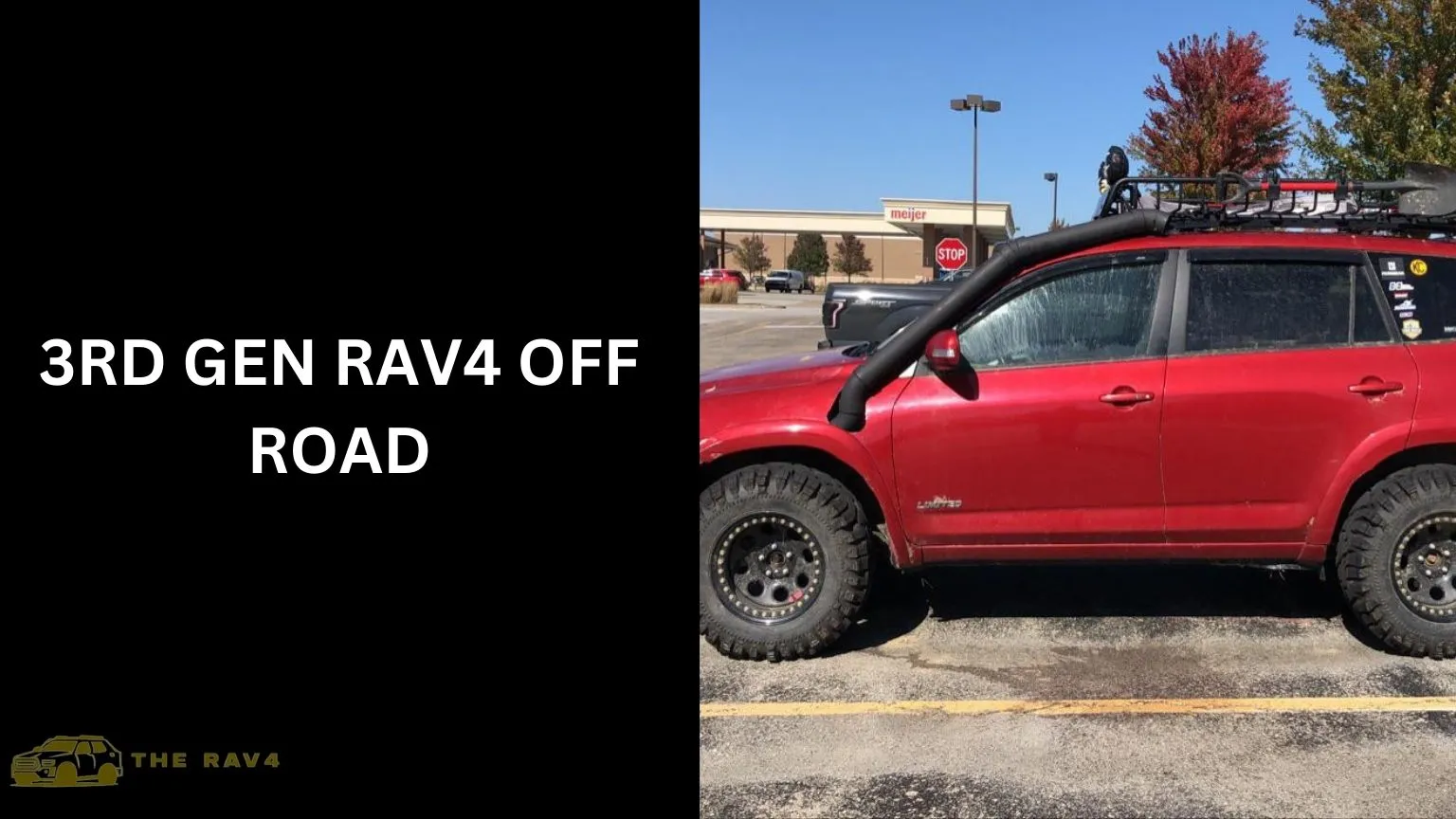
Snorkels intended for deep water crossings prove largely unnecessary for RAV4 applications, as the unibody construction and numerous electrical components make deep water crossings inadvisable regardless of air intake position. While snorkels theoretically move air intake higher reducing water ingestion risk, the RAV4’s door seals, floor penetrations, and low-mounted electrical components create water intrusion concerns long before air intake position becomes limiting. Save the $400-$800 snorkel cost for more beneficial modifications.
Light bars and auxiliary lighting provide minimal off-road capability benefit for most users, as the scenarios requiring ultra-bright lighting (nighttime technical rock crawling or trail running) rarely match RAV4 owner usage patterns. The factory headlights prove adequate for nighttime forest road navigation and general evening trail use, making expensive lighting additions ($300-$1,000+) questionable investments for marginal utility most owners never actually utilize.
Roof racks and excessive accessory weight reduce ground clearance (through additional weight compressing suspension), raise center of gravity (degrading stability), and reduce fuel economy without adding off-road capability. While roof racks prove useful for cargo management, excessive accessory loading proves counterproductive for off-road performance—keep accessories minimal and focused on capability improvements rather than aesthetic additions.
“Recovery” gear including winches and traction aids might seem essential off-road equipment, but realistically assess whether your RAV4’s capability tier and typical usage actually justifies $1,000-$2,000+ in recovery equipment. Owners venturing alone into remote challenging terrain should carry recovery gear, but most recreational RAV4 users traveling maintained trails in groups gain little value from expensive winch installations rarely or never used.
Realistic Terrain Assessment: What Third-Gen RAV4s Handle Well
Understanding the RAV4’s appropriate terrain tier helps owners enjoy its capabilities without attempting scenarios likely to result in damage, getting stuck, or dangerous situations.
Excellent Terrain: Where RAV4s Excel
Graded dirt roads and forest service roads represent ideal third-gen RAV4 terrain, with the vehicle’s ground clearance, AWD, and general capability proving more than adequate for maintained unpaved roads accessing campgrounds, trailheads, recreational properties, or scenic areas. These conditions rarely challenge the RAV4’s limits enabling confident comfortable driving at reasonable speeds without concern for damage or getting stuck.
Light two-track trails with moderate ruts similarly suit RAV4 capabilities well, with the modest ground clearance and articulation handling typical trail surfaces without drama. Owners should drive conservatively maintaining momentum through loose sections and carefully navigating obstacles, but the RAV4’s capabilities prove adequate for the vast majority of maintained recreational trails throughout the United States.
Snow-covered roads and winter conditions benefit from the RAV4’s AWD system, reasonable ground clearance, and winter tire capability (when appropriately equipped) enabling confident navigation of unplowed roads, snowy parking areas, and winter recreation access. The vehicle handles deep snow up to 6-8 inches without difficulty, with deeper snow potentially exceeding ground clearance causing high-centering where deeper-clearance vehicles float over tops.
Sandy surfaces including beaches and desert areas prove manageable with appropriate tires (all-terrains), reduced tire pressure for additional flotation (15-18 PSI versus normal 30+ PSI), and momentum management preventing bogging down in soft sections. The RAV4’s modest weight helps in sand compared to heavier vehicles that sink more readily, though the limited ground clearance requires caution in deep soft sand where high-centering remains possible.
Moderate Terrain: Manageable with Caution
Rocky trails with embedded rocks and moderate obstacles prove navigable by careful drivers who pick lines avoiding direct large rock impacts, use appropriate speed management (slow enough to prevent damage but maintaining enough momentum to climb obstacles), and accept occasional undercarriage contact with rocks that won’t damage protected components. Skid plates prove valuable here preventing damage from inevitable scrapes.
Muddy trails with moderate depth and consistency challenge the RAV4 but remain passable with appropriate technique including maintaining momentum, avoiding stopping in soft sections where starting again proves difficult, picking firmer lines where possible, and accepting that the limited ground clearance means deeper mud holes might be impassable requiring alternate routes or turnaround.
Moderate stream crossings with firm bottoms prove manageable if water depth remains under 12-15 inches (below door seals) and current isn’t strong enough to move the vehicle laterally. The key lies in cautious assessment before commitment—walk crossings first if possible verifying depth and bottom conditions rather than blindly driving into water that might prove deeper or softer than visible from shore.
Steep grades within the vehicle’s approach/departure angle limits provide excitement testing the RAV4’s capability but remain navigable through appropriate speed management, proper gear selection (lower gears maintaining engine braking and preventing excessive wheel speed), and careful line selection avoiding the steepest portions where angles might cause bumper/skid scraping.
Challenging Terrain: Beyond RAV4 Capability
Technical rock crawling over large boulders exceeds RAV4 capability through insufficient ground clearance (belly drags before clearing obstacles), inadequate approach/departure angles (bumpers strike rocks on climbs/descents), limited suspension articulation (wheels lift off ground losing traction), and lack of locking differentials (spinning lifted wheels waste power). This terrain demands purpose-built vehicles—attempting in a RAV4 risks expensive damage or becoming stuck in positions requiring professional recovery.
Deep mud holes and bog sections similarly exceed capability once depth reaches 12-15 inches, with the RAV4’s modest ground clearance causing high-centering where mud contacts the belly pan lifting wheels off bottom, the open differentials causing power loss when wheels slip, and the AWD system’s limitations preventing the continuous all-wheel power delivery that dedicated systems provide. Know your limits and turn around when mud looks excessively deep.
Serious sand dunes and deep soft sand require ground clearance, power, and specialized equipment (heavy-duty radiators, transmission coolers) that RAV4s lack. While modest sand navigation proves possible as noted earlier, attempting serious recreational sand driving risks overheating, getting stuck in impossible-to-escape situations, or mechanical damage from sustained high-power operation in adverse conditions.
Technical trails rated “difficult” or higher on established trail rating systems should be avoided by stock or lightly-modified RAV4s, as these ratings indicate terrain characteristics (large obstacles, severe articulation requirements, sustained steep sections) that exceed crossover capabilities. The RAV4 handles most “easy” and “moderate” rated trails comfortably—that’s genuine capability for recreational users, and attempting more risks exceeding the vehicle’s limits with expensive or dangerous consequences.
Conclusion: Maximizing Third-Gen RAV4 Off-Road Within Realistic Limits
The third-generation Toyota RAV4 delivers genuinely useful off-road capability that dramatically exceeds typical cars and many car-based crossovers, enabling confident navigation of forest roads, moderate trails, challenging weather conditions, and typical outdoor recreation access scenarios that represent 95% of what most owners actually encounter. This capability, combined with Toyota’s legendary reliability, comfortable on-road manners, and reasonable pricing in used markets, makes third-gen RAV4s excellent choices for buyers seeking occasional off-road capability without the compromises that purpose-built off-road vehicles impose.
However, recognizing the RAV4’s fundamental limitations from unibody construction, modest ground clearance, limited suspension articulation, and on-demand AWD system proves essential for safe, enjoyable off-road use without expensive damage or dangerous situations. The RAV4 isn’t a Wrangler, 4Runner, or dedicated off-road machine—attempting terrain appropriate for those vehicles likely exceeds the RAV4’s capabilities creating problems rather than adventure.
Strategic modifications including suspension lift and all-terrain tires genuinely improve capability enabling more challenging terrain navigation while maintaining reasonable on-road manners for daily driving. These investments total $2,000-$4,000 creating significantly more capable vehicles than stock configurations, though fundamental platform limitations remain preventing transformation into true off-road machines regardless of modification investment.
The key to satisfying third-gen RAV4 off-road ownership involves embracing what the vehicle does well—enabling outdoor recreation access, confidently handling moderate trails and challenging conditions, and providing reliable transportation to adventures—while accepting what it cannot do and choosing terrain appropriately. Owners who work within these boundaries enjoy years of satisfying outdoor adventures, while those attempting to exceed them face frustration, expense, and potential danger.
For buyers seeking a versatile vehicle delivering 90% daily-driver civility with 60% off-road capability (versus dedicated off-roaders delivering 70% daily-driver civility with 90% off-road capability), the third-gen RAV4 represents an excellent compromise. Understanding and embracing this positioning rather than wishing it were something it’s not enables maximum enjoyment of the genuine capabilities Toyota engineered into this popular crossover.