Table of Contents
Toyota Driver Attention Warning System: Complete Guide to the Coffee Cup Icon, Fatigue Detection Technology, and Safe Driving Practices
Modern vehicles incorporate increasingly sophisticated safety technologies monitoring not just external road conditions and surrounding traffic but also driver behavior and physiological state, recognizing that driver impairment from fatigue, distraction, or drowsiness causes thousands of preventable crashes annually despite the vehicles themselves functioning perfectly and road conditions presenting no inherent hazards. Toyota’s Driver Attention Warning system represents one manufacturer’s approach to addressing this human-factors safety challenge, using sensors and algorithms analyzing driving patterns to detect signs suggesting diminished driver alertness and intervening through dashboard warnings encouraging rest breaks before fatigue-related incidents occur—a proactive safety philosophy extending beyond traditional passive protection (airbags, crumple zones) or reactive systems (automatic emergency braking) to address problems before they create dangerous situations requiring emergency intervention.
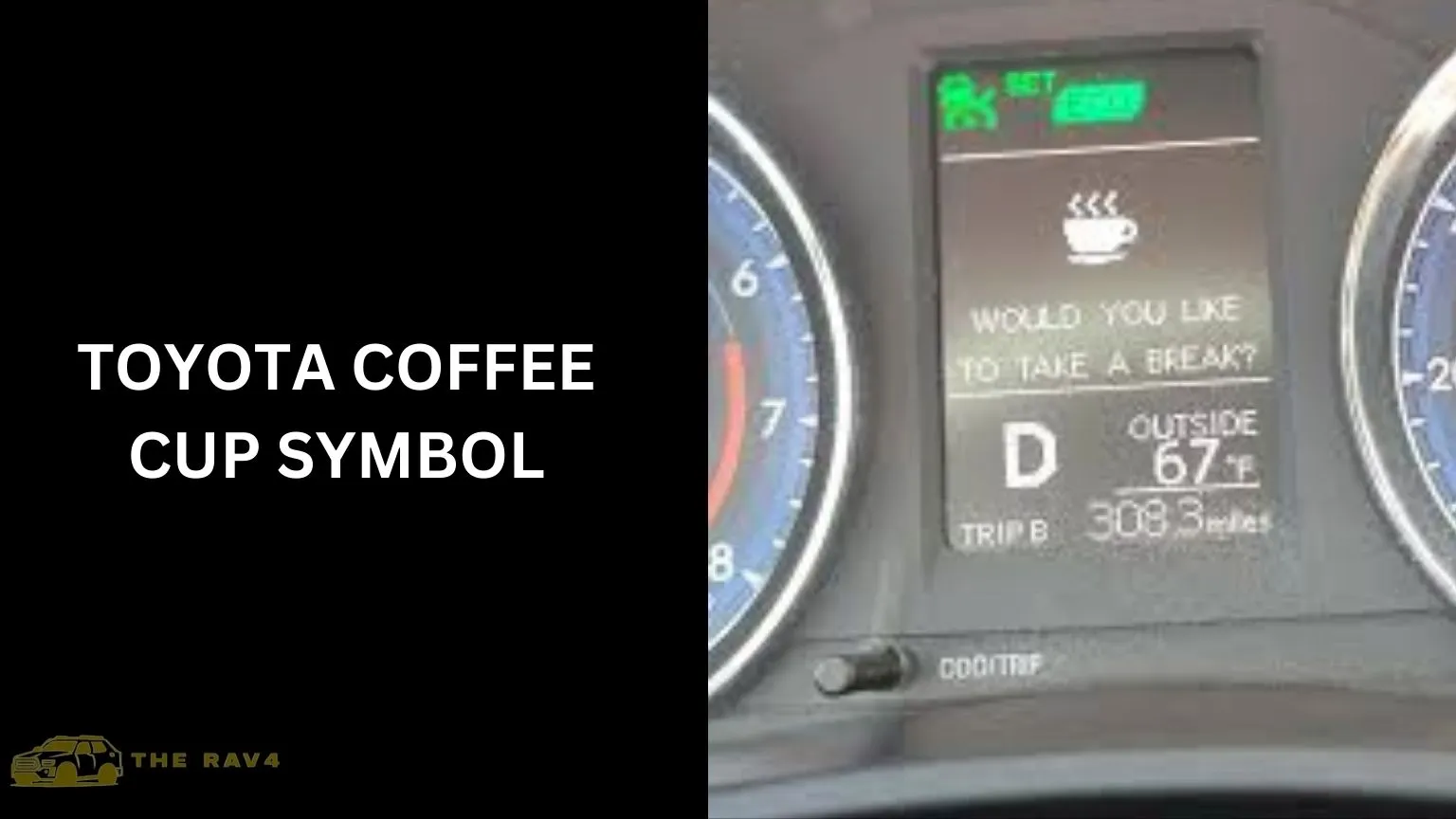
The system’s most visible element—a coffee cup icon appearing on the dashboard instrument cluster accompanied by text messages suggesting drivers take rest breaks—has become familiar to Toyota owners though many remain unclear about exactly what triggers these warnings, whether the system actually “knows” they’re tired or simply follows programmed patterns based on driving duration, how accurate the fatigue detection proves in real-world conditions, and whether drivers should always heed warnings or if false alerts occur frequently enough to justify ignoring recommendations. These questions prove important both for understanding valuable safety technology that genuinely prevents crashes and for avoiding either over-reliance on systems with limitations or dismissive attitudes toward warnings that sometimes prove life-saving when drivers don’t recognize their own impairment levels.
Understanding how Toyota’s Driver Attention Warning operates, what specific behaviors and patterns trigger alerts, how the system differs across various Toyota models and model years as technology evolves, realistic assessment of accuracy and limitations preventing either false confidence or unjustified skepticism, practical guidance for responding to warnings appropriately, and comparison with competitor systems from other manufacturers provides complete knowledge enabling drivers to leverage this safety technology effectively while recognizing its boundaries. This comprehensive guide examines every dimension of Toyota’s driver fatigue monitoring including detailed technical explanation of detection algorithms and sensor inputs, model-by-model system variations and capability differences, real-world testing results and owner experiences revealing actual performance, practical strategies for maximizing safety benefits, and broader context about drowsy driving risks that motivated these technologies’ development—providing complete information for informed safe driving practices supported by but not blindly dependent on electronic monitoring systems.
Understanding Driver Fatigue: The Problem These Systems Address
Before examining Toyota’s specific technological approach, understanding the scope and severity of drowsy driving risks provides context for why automakers invest substantially in fatigue detection systems.
The Scale of Drowsy Driving Crashes
The National Highway Traffic Safety Administration (NHTSA) estimates that drowsy driving causes approximately 100,000 police-reported crashes annually in the United States alone, resulting in roughly 800 deaths and 50,000 injuries—though experts believe actual numbers substantially exceed official statistics since drowsiness proves difficult to definitively identify in crash investigations compared to obvious factors like speeding, alcohol, or mechanical failures. The underreporting occurs because crashed drivers often cannot accurately recall their alertness state immediately before incidents, witnesses rarely observe drowsiness in other vehicles, and post-crash evidence doesn’t preserve physiological indicators the way alcohol breath tests or vehicle damage patterns reveal other crash causes.
International studies suggest even higher prevalence, with research from various countries indicating drowsy driving contributes to 15-30% of all crashes depending on crash type and severity, with fatigue-related incidents particularly overrepresented in specific scenarios including early morning crashes (2 AM – 6 AM), mid-afternoon crashes (2 PM – 4 PM corresponding to natural circadian alertness dips), long-distance highway driving where monotony and lack of stimulation accelerate fatigue onset, and rural roads where limited traffic and straight routes provide insufficient stimulation maintaining alertness. These patterns reveal drowsy driving as predictable rather than random phenomenon, creating opportunities for technological interventions identifying high-risk conditions and warning drivers before crashes occur.
The physiological reality proves that impaired drivers often cannot recognize their own dangerous state, with cognitive degradation from fatigue occurring gradually and insidiously unlike alcohol intoxication’s more obvious subjective effects. Fatigued drivers experience microsleeps (brief 2-5 second episodes of lost consciousness) without awareness, reduced reaction times approaching drunk-driving impairment levels, degraded decision-making and risk assessment, and diminished ability to accurately self-assess their alertness—the dangerous combination of actual impairment plus inability to recognize impairment creates situations where drivers confidently continue operating vehicles despite being dangerously compromised, making external monitoring systems that detect objective behavioral indicators potentially more reliable than drivers’ subjective self-assessment.
Why Drivers Continue Despite Fatigue
The persistence of drowsy driving despite widespread awareness of its dangers reflects multiple factors including schedule pressures (work commitments, family obligations, time-sensitive travel creating perceived imperatives to continue driving despite fatigue), overconfidence in ability to “push through” fatigue drawing on past experiences successfully completing tired drives without incidents, normalizing the danger through cultural attitudes treating fatigue as inevitable rather than dangerous impairment, and simple lack of convenient safe alternatives (limited rest areas on some routes, concerns about vehicle/cargo security during roadside sleeping, motel costs for unplanned overnight stops).
The gradual nature of fatigue onset proves particularly problematic as drivers don’t experience sudden dramatic capability loss but instead slowly degrading performance creating the “boiling frog” effect where they don’t recognize dangerous impairment because it developed incrementally rather than instantly. A driver who was alert departing home might drive two hours reaching marginally tired state, continue another hour becoming significantly fatigued, and push yet another hour into genuinely dangerous impairment—each increment seeming manageable and the alternative of stopping creating perceived delays or inconveniences that drowsy brains rationalize aren’t necessary despite objective danger. External monitoring systems detecting these gradual changes potentially provide reality checks that impaired drivers cannot generate through self-assessment.
How Toyota Driver Attention Warning Works: Technical Overview
Understanding the technology behind fatigue detection helps drivers appreciate both capabilities and limitations, setting realistic expectations for what systems can and cannot accomplish.
Primary Detection Method: Steering Pattern Analysis
Toyota’s Driver Attention Warning primarily monitors steering inputs analyzing subtle patterns suggesting diminished alertness, with the system continuously tracking steering wheel angle, correction frequency and magnitude, and deviation patterns from expected smooth driving behavior. The underlying principle recognizes that alert drivers maintain relatively smooth consistent steering with gentle corrections keeping vehicles centered in lanes, while fatigued drivers exhibit distinctive patterns including increased steering corrections (more frequent small adjustments as concentration lapses allow drift then requires correction), larger correction magnitudes (fatigued drivers allow more substantial drift before recognizing need to correct), and irregular correction timing (inconsistent intervals between corrections rather than smooth periodic adjustments alert drivers naturally perform).
The algorithms prove sophisticated incorporating baseline establishment where systems learn individual driver’s normal steering patterns during initial driving periods recognizing that some drivers naturally use more steering corrections than others, progressive pattern analysis tracking how current driving compares to established baselines detecting deviations suggesting deteriorating alertness, and filtering to distinguish fatigue-related steering changes from legitimate causes including road curvature requiring steering input, wind gusts causing drift, road crown or camber creating natural pull, and evasive maneuvers for obstacles or traffic. This filtering prevents false alerts from normal driving variations while identifying patterns statistically associated with fatigue-related impairment.
The steering monitoring operates continuously once vehicle speed exceeds approximately 40 MPH (exact threshold varies by model), with the system disabled at lower speeds where steering patterns prove less reliable due to frequent turning, traffic interactions, and parking maneuvers creating legitimate steering variability unrelated to fatigue. The highway-speed focus aligns with research showing fatigue-related crashes concentrate on higher-speed roads where monotony and sustained attention demands accelerate drowsiness while urban driving’s varied stimulation and frequent stops help maintain alertness despite overall fatigue.
Secondary Input: Driving Duration Tracking
Beyond steering analysis, the system tracks continuous driving time as research demonstrates clear correlation between extended driving duration and crash risk, with risk increasing substantially after 2 hours continuous driving and accelerating further beyond 4-6 hours. The duration tracking proves simple compared to steering analysis—internal clocks measure time since vehicle started without engine-off periods exceeding brief stops (refueling, rest stops under 15 minutes), providing objective metric of sustained driving exposure independent of steering behavior or other performance indicators.
The duration thresholds trigger warnings typically around 2 hours of continuous highway driving, with some systems implementing progressive warnings (gentle reminder at 2 hours, more insistent alert at 4 hours, urgent recommendation at 6+ hours) recognizing that fatigue risk escalates with time. However, the specific timing proves configurable across Toyota models with some vehicles allowing drivers to adjust warning thresholds through vehicle settings while others use fixed intervals calibrated by Toyota’s engineers based on research data and legal standards in various markets.
However, duration tracking alone proves insufficient for comprehensive fatigue detection as individual variation proves enormous—some drivers remain alert after 4-5 hours while others show impairment after 90 minutes depending on factors including sleep quality before trip, time of day (driving during natural circadian low points proves more fatiguing), road conditions (monotonous highways accelerate fatigue versus varied terrain maintaining interest), and individual factors (age, fitness, caffeine consumption, medications). The combination of objective duration tracking with behavioral steering analysis creates more robust detection than either method alone, with convergent evidence from both approaches providing higher confidence in fatigue assessment than single-metric systems.
Lane Departure Integration (Model-Dependent)
Some Toyota models integrate Driver Attention Warning with Lane Departure Alert (LDA) or Lane Tracing Assist (LTA) systems that monitor lane position using forward cameras detecting painted lane markings, enabling analysis of lane-keeping behavior as additional fatigue indicator. Fatigued drivers exhibit characteristic lane departure patterns including increased departure frequency (drifting out of lane more often than alert drivers), delayed departure correction (slower reaction recognizing and correcting departures), and weaving patterns (oscillating within lane or crossing repeatedly as concentration lapses).
The lane departure data provides valuable corroboration when steering patterns suggest possible fatigue—if steering shows increased corrections AND lane departures increase simultaneously, the converging evidence strengthens confidence in fatigue assessment versus situations where steering changes might reflect road conditions rather than driver state. However, lane monitoring proves less reliable than steering analysis in some conditions including poorly-marked roads where lane detection fails, heavy rain or snow obscuring markings, construction zones with temporary unusual markings, and night driving where visual lane detection proves challenging—creating situations where steering analysis continues functioning while lane monitoring proves unavailable limiting multimodal confirmation.
The system integration varies substantially across Toyota lineup, with newer models equipped with Toyota Safety Sense 2.5+ generally incorporating more sophisticated lane-integrated monitoring while older vehicles or base trims use standalone steering-only analysis. This creates capability variations where some vehicles provide more accurate fatigue detection through multiple sensor fusion while others rely on single-input analysis with correspondingly higher false-positive and false-negative rates.
The Coffee Cup Warning: What It Means and How to Respond
Understanding the specific warning presentations and appropriate responses helps drivers leverage the system effectively for safety rather than dismissing or misinterpreting alerts.
Warning Display Variations Across Models
The coffee cup icon design and accompanying text varies across Toyota models and model years though the core elements remain consistent—a stylized coffee cup graphic (usually steaming to suggest hot beverage), text message suggesting rest break (“Consider taking a break” being most common phrasing, with variations like “Time for a rest?” or “Please take a break” depending on model and market), and sometimes additional information including driving duration (e.g., “You’ve been driving for 2 hours”) or time since last rest providing context for the warning beyond just behavioral detection.
The display duration and dismissal methods similarly vary with some systems displaying persistent warnings remaining visible until driver acknowledges via button press or steering wheel control, while others show temporary 10-15 second alerts that automatically clear requiring drivers to notice during brief display window. The persistent approach ensures drivers cannot miss warnings though potentially creating annoyance if alerts occur when drivers cannot immediately respond (heavy traffic, no available rest areas), while temporary displays prove less intrusive but risk being missed during brief distraction or when displayed during demanding driving requiring full attention to road rather than dashboard.
The warning escalation in some advanced systems includes multiple alert levels with initial gentle reminders escalating to more insistent warnings if driving continues without rest, potentially incorporating audible chimes (in addition to visual displays) for higher-level alerts, and in most sophisticated implementations potentially reducing effectiveness of adaptive cruise control or other driver assistance features encouraging manual control that helps maintain alertness. This progressive escalation recognizes that single gentle warning might prove insufficient for seriously impaired drivers requiring more dramatic intervention preventing continuation of dangerous operation.
Immediate Response: When and Where to Stop
The optimal response to fatigue warnings involves stopping as soon as safely practical, ideally at upcoming rest areas, service plazas, or other designated stopping locations rather than attempting to push to final destinations that might remain hours away. The temptation to dismiss warnings and continue “just a little farther” often proves dangerous as fatigued brains exhibit poor risk assessment and decision-making—the driver convinced they can safely continue another 30-60 minutes may be objectively incapable of that judgment, with the warning itself providing more reliable assessment than subjective feeling.
The stopping location selection proves important balancing safety and practicality—designated rest areas provide ideal combination of safety (designed for parking, often patrolled, well-lit), legality (permitted overnight stays in most jurisdictions), and amenities (restrooms, vending, pet areas). However, when rest areas prove unavailable, alternatives include service station parking (preferably large chains with 24-hour operations providing security through activity), hotel/motel parking (with permission if not registering as guest), and last-resort highway shoulders (dangerous, illegal in many areas, should be avoided except emergency situations). The key involves planning routes incorporating known rest stops rather than assuming availability, with many GPS systems and smartphone apps now showing rest area locations enabling proactive stopping rather than desperate searching while already fatigued.
The duration of rest breaks proves critical with research demonstrating that effective fatigue recovery requires either 20-30 minute naps (entering light sleep provides substantial cognitive restoration) or 1-2 hour breaks with activity (walking, eating, social interaction providing stimulation rather than passive sitting maintaining drowsiness). The common practice of 5-10 minute stops with quick bathroom use and coffee typically proves insufficient for meaningful alertness restoration though caffeine’s 20-30 minute onset delay means consuming coffee before brief nap creates optimal combination—the nap provides immediate cognitive benefit while caffeine takes effect as driver resumes providing sustained alertness improvement. Simply standing at vehicle stretching and walking around building for 10-15 minutes provides surprising benefit through physical activity stimulation and postural change after sustained sitting.
When Warnings May Not Indicate True Fatigue
False positives occur where system warns despite drivers feeling subjectively alert and confident in their capability, creating dilemmas about whether to trust electronic monitoring over personal assessment. Common false-positive causes include unusual road conditions (very rough pavement creating constant steering corrections, strong crosswinds requiring sustained steering input, poorly-maintained roads with ruts or crown requiring frequent adjustment), vehicle loading affecting handling (heavy cargo, trailer towing, or unusual weight distribution changing steering response requiring more corrections for equivalent lane-keeping), and new or unfamiliar vehicle (recently purchased or rental where driver hasn’t established baseline steering patterns the system uses for comparison).
However, the critical insight involves recognizing that fatigued drivers typically cannot accurately assess their own impairment—while false positives definitely occur, the risk of dismissing legitimate warning as false positive when actually impaired proves extremely dangerous given fatigue’s insidious degradation of judgment and self-awareness. The safer approach involves treating all warnings seriously even when subjectively feeling alert, taking brief breaks to determine whether rest produces noticeable alertness improvement (validating warning accuracy) versus continuing feeling unchanged (suggesting possible false positive). The few minutes invested in verification prove worthwhile given the catastrophic consequences of wrongly dismissing accurate fatigue warnings.
The system limitations mean drivers shouldn’t rely exclusively on electronic monitoring for fatigue management—absence of warning doesn’t guarantee safe alertness as systems prove imperfect with false-negative rates where genuine fatigue goes undetected. Drivers should maintain awareness of subjective fatigue signs (heavy eyelids, frequent yawning, difficulty focusing, wandering thoughts, missing exits/turns, difficulty remembering past several miles) and respond to these internal indicators even without electronic warnings, viewing the monitoring system as additional safety layer rather than replacement for personal responsibility and awareness.
System Settings, Customization, and Disabling Options
Understanding available configuration options helps drivers optimize system operation for their preferences and usage patterns while recognizing the safety implications of various settings.
Adjusting Warning Sensitivity and Timing
Most Toyota models allow limited customization of Driver Attention Warning settings through vehicle information display menus or infotainment system settings, typically including options for warning timing thresholds (adjusting whether warnings trigger after 1.5, 2, or 2.5 hours driving), sensitivity levels (more aggressive earlier warning versus conservative approach waiting for clearer impairment signs), and display preferences (persistent versus temporary warnings, audible chime inclusion, brightness/contrast of icon). The specific available adjustments vary substantially across model years and trim levels with newer vehicles generally offering more configuration granularity while older or base models provide fixed settings with limited user adjustment.
The adjustment process typically involves navigating multi-level menus—a common path involves pressing Menu button on steering wheel or dashboard, scrolling to Settings or Vehicle Settings, selecting Driver Assistance or Safety Systems category, finding Driver Attention or similar heading, and accessing available configuration options. The exact navigation proves vehicle-specific making owner’s manual consultation advisable, though many owners never discover these settings due to buried menu locations and unclear labeling making the customization capability unknown to average users who simply accept default configurations whether optimal for their usage or not.
The practical value of adjustments proves questionable for most drivers as Toyota’s default calibrations reflect extensive research and typically prove appropriate for average users—overly aggressive sensitivity settings create false-positive annoyance that might encourage complete system disabling negating safety benefits, while overly conservative settings increase false-negative risk where genuine impairment goes undetected. The defaults represent engineering judgment balancing competing priorities and most drivers prove better served accepting these calibrations rather than attempting optimization that might degrade rather than improve performance. However, drivers with specific needs (professional drivers with regulatory rest requirements, medical conditions affecting steering patterns, frequent driving in conditions triggering false positives) might benefit from sensitivity adjustments reducing nuisance alerts while maintaining core safety function.
Complete System Disabling: Process and Implications
Toyota generally allows complete disabling of Driver Attention Warning though the process varies across models from simple menu toggle enabling immediate permanent disabling to more involved procedures requiring multiple confirmation steps or even dealer service tool access discouraging casual disabling. The design philosophy reflects tension between respecting user autonomy (allowing owners to configure their vehicles according to preferences) and paternalistic safety protection (making disabling difficult to prevent impulsive decisions that increase crash risk)—different manufacturers and jurisdictions balance these competing values differently with some markets implementing regulatory requirements that certain safety systems remain permanently active while others defer to user choice.
The disabling persistence similarly varies with some systems remaining disabled until manually re-enabled (requiring explicit decision to restore safety function), others resetting to enabled state each ignition cycle (requiring repeated disabling if users want persistent deactivation), and middle-ground approaches where disabling persists for days or weeks before automatic re-enabling. The automatic re-enabling reflects recognition that disabling decisions often occur during specific annoying false-positive situations rather than representing permanent user preference—the driver frustrated by repeated false alerts on particular route might disable system impulsively but would prefer it remain active during different driving where false-positive risk proves lower and safety value greater.
The safety implications of disabling prove straightforward—deactivating fatigue monitoring removes a safety layer that statistics demonstrate prevents real crashes even if imperfect technology. The drivers most likely to disable systems (those frequently triggering warnings suggesting greater fatigue susceptibility or more demanding driving schedules) prove exactly those who might benefit most from monitoring, creating concerning self-selection where highest-risk populations opt out of protection. However, the counterargument recognizes that excessive false positives creating warning fatigue (metaphorical term for ignoring frequent inaccurate alerts) might prove more dangerous than complete disabling if drivers begin reflexively dismissing all warnings including accurate ones—suggesting that some level of disabling capability prevents worse outcome of users learning to completely ignore safety systems due to excessive false alerts.
The recommendation involves selective thoughtful disabling rather than blanket approaches—drivers might reasonably disable monitoring during specific known-false-positive situations (extremely rough roads, strong wind conditions, vehicle towing) while maintaining activation during normal driving where accuracy proves higher. This requires understanding why false positives occur and whether specific driving contexts systematically trigger issues versus random unpredictable false alerts that cannot be practically avoided through selective disabling. The owner’s manual and dealer service departments can provide guidance on whether specific false-positive patterns suggest calibration issues correctable through service rather than necessitating user workarounds through disabling.
Model-by-Model System Variations and Capabilities
Understanding how Driver Attention Warning capabilities vary across Toyota’s lineup helps buyers evaluate whether specific models provide desired safety features and helps current owners understand their vehicles’ specific implementations.
Toyota Safety Sense Generations and Coverage
Toyota Safety Sense (TSS) represents Toyota’s branded active safety suite incorporating various driver assistance technologies including pre-collision system, lane departure alert, automatic high beams, and dynamic radar cruise control—with Driver Attention Warning integration varying across TSS generations. The evolution includes TSS-C (first generation, limited models), TSS-P (second generation, broader availability), TSS 2.0 (third generation improving performance), and TSS 2.5/2.5+ (current generation with enhanced capabilities)—each generation improving sensor quality, algorithm sophistication, and feature integration creating meaningfully different performance despite similar marketing descriptions.
The Driver Attention Warning specifically appears as standard equipment starting with TSS 2.0 (approximately 2018-2019 model years depending on specific vehicle) though some earlier models included similar functionality under different names or through separate systems not integrated into TSS branding. The TSS 2.5+ generation (2020+ on most models) incorporates more sophisticated monitoring using enhanced sensor fusion and improved algorithms reducing false-positive rates while detecting fatigue earlier than previous generations—creating situations where nominally similar “Driver Attention Warning” varies substantially in actual performance based on underlying TSS generation and implementation quality.
The coverage across Toyota lineup proves comprehensive for recent models with essentially all 2020+ Toyota vehicles including Driver Attention Warning as standard equipment (excluding certain base fleet/commercial models), while 2018-2019 models show mixed availability with some vehicles including the feature while others don’t depending on trim level and option packages. Pre-2018 vehicles generally lack factory-installed fatigue monitoring though some limited implementations existed on specific models or premium trims—creating situations where used vehicle buyers should specifically verify presence rather than assuming all “Toyota Safety Sense” vehicles include equivalent features.
RAV4-Specific Implementation Details
The Toyota RAV4 (one of Toyota’s highest-volume models) received Driver Attention Warning starting with the fifth-generation model (2019+), with all trim levels including the system as standard equipment through TSS 2.0 (2019-2020) or TSS 2.5+ (2021+) integration. The RAV4’s implementation proves relatively sophisticated incorporating both steering analysis and lane departure correlation when equipped with Lane Tracing Assist (standard on most trims) enabling more accurate detection than steering-only monitoring. The system operates at speeds above approximately 40 MPH and displays warnings on the 7-inch multi-information display located between speedometer and tachometer, with coffee cup icon and scrolling text message suggesting breaks.
The RAV4 Hybrid and RAV4 Prime (plug-in hybrid) use identical monitoring systems as conventional RAV4 models despite different powertrains, with no differences in fatigue detection capability based on engine/drive system. However, the Prime’s larger 12.3-inch digital instrument cluster (standard on XSE trim) displays coffee cup warnings more prominently than conventional RAV4’s smaller display—purely cosmetic difference not affecting detection capability but potentially improving driver noticeability of warnings reducing risk of missed alerts during brief display periods.
The Adventure and TRD Off-Road trims (off-road-focused variants) implement identical Driver Attention Warning as other RAV4 trims without special calibrations for off-road driving—creating potential increased false-positive risk during aggressive trail driving where steering corrections from obstacles rather than fatigue might trigger warnings. However, the system’s speed threshold (approximately 40 MPH minimum) means most technical trail driving occurs below activation speed preventing false alerts during low-speed rock crawling or tight maneuvering, with warnings primarily occurring during highway transit to trail destinations where fatigue detection remains relevant and appropriate.
Camry, Corolla, Highlander, and Other Models
The Toyota Camry received Driver Attention Warning for 2018 model year (with TSS 2.0 on most trims, though base L trim initially excluded the feature), making it among the first Toyota vehicles offering factory fatigue monitoring. The 2021+ eighth-generation Camry includes TSS 2.5+ with improved monitoring on all trims creating consistent capability across trim levels. The Camry’s predominantly highway usage profile (compared to RAV4’s more varied urban/highway mix) makes fatigue monitoring particularly valuable given research showing drowsy driving concentrates on sustained highway driving that Camry typically undertakes.
The Toyota Corolla similarly gained Driver Attention Warning for 2020 model year with complete lineup redesign introducing TSS 2.0 as standard equipment even on base L trim—reflecting Toyota’s strategy of democratizing safety technology rather than reserving for premium trim levels. The Corolla’s compact sedan positioning creates less rear cargo obstruction of rear camera (compared to SUVs where cargo might obscure camera views) potentially improving lane-monitoring reliability that feeds into fatigue detection when integrated with Lane Tracing Assist equipped models.
The Toyota Highlander three-row SUV received Driver Attention Warning for 2020 fourth-generation model through TSS 2.5+ standard equipment across all trims, with the system particularly valuable for family road-trip usage where long-distance driving with children creates cognitive load and distraction potentially accelerating fatigue onset beyond what driving duration alone would suggest. The Highlander’s typical usage patterns (family vacations, road trips, long-distance travel rather than short urban commutes) place it in demographic where fatigue monitoring provides substantial safety value given extended driving exposure.
The Tacoma, Tundra, and 4Runner trucks show more varied implementation with Tundra receiving TSS 2.5+ and Driver Attention Warning for 2022 complete redesign, while Tacoma and 4Runner continue using older TSS generations on current models (as of 2024) with limited or absent fatigue monitoring—creating situations where Toyota’s truck lineup lags sedan/SUV offerings for this particular safety feature despite trucks’ typical usage patterns (towing, highway cruising, rural driving) creating substantial fatigue risk. The expected next-generation Tacoma and eventual 4Runner redesigns will likely incorporate comprehensive monitoring bringing truck lineup to parity with car offerings.
Real-World Performance: Accuracy, Limitations, and Owner Experiences
Moving beyond specifications to actual owner experiences reveals how Driver Attention Warning performs during daily use, highlighting both valuable safety interventions and frustrating false alerts.
Documented Success Stories and Crash Prevention
Definitive crash prevention attribution proves difficult for fatigue monitoring systems as successful interventions involve crashes that didn’t happen leaving no dramatic evidence of safety value—unlike automatic emergency braking where saved crashes often appear in dashcam videos documenting imminent collisions avoided through intervention. However, owner testimonials and insurance company research provide substantial evidence that fatigue warnings influence driver behavior with studies showing 40-60% of warned drivers report taking rest breaks they wouldn’t have otherwise taken, with many acknowledging feeling noticeably more alert after breaks suggested by monitoring systems even when initially dismissing warnings as unnecessary.
Anecdotal reports frequently describe situations where drivers initially dismissed coffee cup warnings feeling subjectively alert, reluctantly stopped due to system insistence or passenger pressure, and recognized during breaks that they were indeed more impaired than they’d realized—experiencing micro-sleeps during rest stop walks, feeling dramatically refreshed after 20-minute naps, or simply recognizing upon reflection that their driving had deteriorated without conscious awareness. These experiences validate the concept that external objective monitoring provides value beyond subjective self-assessment, with the technology detecting impairment that drivers’ fatigued brains cannot accurately evaluate.
The insurance industry data shows statistically significant crash rate reductions (approximately 3-8% depending on crash type and study methodology) for vehicles equipped with fatigue monitoring versus equivalent vehicles without such systems—modest but meaningful reduction translating to thousands of prevented crashes annually across entire vehicle fleet. The economic value proves substantial with insurance companies increasingly offering premium discounts (typically 3-5%) for vehicles equipped with comprehensive driver monitoring as actuarial analysis demonstrates lower claim costs justifying reduced premiums despite imperfect technology that doesn’t prevent all fatigue-related crashes.
Common False Positive Scenarios and Driver Frustration
The most frequently-reported false positive involves rough road conditions where poor pavement quality, potholes, frost heaves, or other surface irregularities create constant steering corrections that algorithms interpret as fatigue-related pattern degradation despite drivers remaining fully alert and simply responding to objective road conditions. This proves particularly problematic on rural highways or poorly-maintained secondary roads where drivers might receive repeated warnings throughout extended drives despite no actual impairment—creating frustration and potentially encouraging system disabling negating safety benefits during same trips where true fatigue might develop later.
Strong crosswind conditions similarly trigger false alerts as drivers make sustained steering inputs counteracting wind push, with the algorithm potentially misinterpreting the unusual steering pattern as impairment rather than environmental response. This particularly affects high-profile vehicles (SUVs, trucks) more susceptible to wind effects and occurs most commonly in prairie regions, coastal areas, or mountain passes where sustained strong winds prove typical rather than exceptional conditions—creating geographic patterns where certain regions experience higher false-positive rates than others based on prevailing weather rather than actual system defects.
The learning period for new vehicles creates elevated false-positive risk as systems haven’t yet established robust baseline understanding of individual driver’s normal steering patterns, potentially flagging as unusual behavior that later proves to be that particular driver’s consistent approach. This typically resolves within several hundred miles as baseline data accumulates though it creates frustration during initial ownership when drivers still learning vehicle characteristics also contend with overly-sensitive monitoring generating nuisance alerts. Some manufacturers implement explicit learning modes or extended baseline periods before full monitoring activation though Toyota’s approach varies across models without consistent learning-phase implementation.
The false-positive frustration creates real risk that drivers disable systems or learn to reflexively ignore all warnings including accurate ones—a “cry wolf” effect where excessive false alerts train users that warnings prove meaningless creating dangerous indifference that persists even when real fatigue occurs and warnings prove accurate. This highlights importance of manufacturer calibration achieving acceptable false-positive rates (industry targets typically aim for <10% false positives though achievement varies) while maintaining low false-negative rates (missing real fatigue cases)—difficult balance requiring substantial real-world testing and algorithm refinement.
Missed Detections and System Limitations
False negatives (failure to detect genuine fatigue) occur when drivers experience real impairment that steering analysis doesn’t capture, with most common scenarios including smooth highway driving where minimal steering corrections occur even for fatigued drivers (straight interstates with light traffic require little steering input providing few opportunities for pattern analysis), automated steering assistance use where Lane Tracing Assist or similar systems handle steering reducing human input that monitoring analyzes, and certain cognitive fatigue types where drivers maintain adequate motor control (steering) despite deteriorating decision-making, reaction time, and situation awareness.
The physiological reality proves that drowsiness manifests differently across individuals and situations—some fatigued drivers show dramatic steering pattern degradation quickly detected by monitoring, while others maintain relatively normal steering patterns despite dangerous cognitive impairment including delayed reactions, poor judgment, and vulnerability to microsleeps. The steering-based detection proves effective for average cases but misses substantial minority of fatigue manifestations that don’t prominently affect steering behavior, creating false-negative risk where genuinely dangerous impairment goes undetected and unwarned.
The speed threshold limitations (monitoring typically inactive below 40 MPH) create gaps where urban driving fatigue goes undetected despite research showing drowsy driving crashes occur across all road types not exclusively on highways. However, the activation threshold reflects technical reality that low-speed driving’s frequent turning, stopping, and speed changes create steering pattern variability that proves difficult to distinguish from fatigue-related deterioration—the engineering judgment accepts missing some low-speed fatigue cases to avoid overwhelming false-positive rates that would render system unusable. Future systems incorporating additional physiological monitoring (eye-tracking, heart rate, facial expressions) might enable reliable low-speed detection current steering-only approaches cannot achieve.
Broader Context: Drowsy Driving Science and Prevention Strategies
Understanding the science underlying fatigue-related impairment and comprehensive prevention approaches provides context showing that electronic monitoring represents one tool among many for addressing complex safety challenge.
Sleep Science and Circadian Rhythm Effects
Human alertness follows strong circadian rhythms with predictable daily peaks and troughs regardless of sleep quantity, creating time-of-day vulnerability where driving during natural low-alertness periods (typically 2-6 AM and 2-4 PM) proves substantially more dangerous than equivalent driving during peak-alertness times (typically 10 AM-noon and 6-8 PM though individual variation exists). These circadian effects prove so powerful that well-rested drivers during circadian troughs might show worse performance than slightly sleep-deprived drivers during circadian peaks—suggesting that journey timing proves as important as sleep preparation for fatigue risk management.
The sleep debt accumulation proves insidious with chronic mild sleep restriction (sleeping 6 hours nightly versus needed 7-9 hours) creating steadily increasing cognitive impairment across days that individuals don’t consciously recognize—after two weeks of 6-hour sleep, objective performance measures show impairment equivalent to 24 hours total sleep deprivation though subjective sleepiness ratings show only modest increases as adaptation suppresses conscious fatigue sensation while objective capability continues degrading. This creates dangerous situations where chronically sleep-restricted drivers (common in modern society) operate with substantial impairment they don’t recognize and that electronic monitoring systems struggle to detect since driving occurs during adapted baseline rather than acute fatigue episode showing dramatic pattern changes.
The microsleep phenomenon represents particularly dangerous manifestation where complete loss of consciousness occurs for 2-5 seconds without warning or memory, with drivers often not recognizing microsleeps occurred despite video evidence clearly showing eye closures and loss of awareness. At highway speeds, 3-second microsleep traverses 130+ feet (at 60 MPH)—sufficient distance to depart roadway, strike obstacles, or collide with vehicles ahead. The microsleeps occur without conscious control and increase dramatically when sleep-deprived or during circadian low points, with monitoring systems attempting to detect behavioral precursors (steering degradation, lane departures) before microsleeps occur rather than detecting microsleeps themselves that provide no reaction time for corrective intervention.
Countermeasures and Effective Fatigue Management
The most effective fatigue countermeasure involves proper sleep before driving with 7-9 hours recommended for most adults, recognition that sleep cannot be stored (sleeping extensively before anticipated sleep deprivation provides minimal protection), and understanding that sleep debt requires extended recovery (single good night’s sleep doesn’t reverse weeks of chronic restriction). This fundamental prevention proves more valuable than any technological monitoring or emergency countermeasure—well-rested drivers show dramatically lower crash risk regardless of journey duration or time-of-day compared to sleep-deprived drivers with equivalent monitoring assistance.
Strategic caffeine use provides temporary alertness improvement when properly implemented, with optimal approach involving 200-300 mg consumption (approximately 2-3 cups coffee) when fatigue first recognized rather than waiting until severe impairment develops, recognition that caffeine requires 20-30 minutes for effect onset (preventing immediate benefit expectations), understanding that caffeine effectiveness decreases with habitual consumption (chronic high consumption creates tolerance reducing acute dose benefits), and awareness that caffeine masks fatigue subjectively without reversing objective impairment creating false confidence in capability exceeding actual performance. The combination of caffeine consumption immediately before 15-20 minute nap (caffeine taking effect as nap ends) proves particularly effective providing both immediate cognitive benefit from brief sleep and sustained enhancement as caffeine takes effect.
Physical activity breaks during long drives provide surprising benefit through posture changes after sustained sitting, cardiovascular stimulation increasing alertness, environmental variety preventing monotony, and opportunity for social interaction if traveling with companions. Research shows 15-minute walks combined with light stretching provide alertness restoration approaching 20-minute naps though with faster onset making brief stops more practical when extended nap breaks prove infeasible. The key involves actual physical movement rather than passive rest—simply standing at vehicle or sitting at rest stop provides minimal benefit compared to walking around building, light jogging in place, or deliberate stretching exercises.
The journey planning proves critical for fatigue prevention with strategies including limiting single-day driving to 8-10 hours maximum recognizing that capabilities diminish throughout sustained driving regardless of breaks, scheduling long drives during natural alertness peaks avoiding early-morning or mid-afternoon circadian troughs when possible, planning predetermined rest stops at 2-hour intervals rather than driving until fatigue forces breaks, and building schedule flexibility allowing overnight stops when fatigue exceeds expected levels rather than pushing to predetermined destinations creating pressure to drive impaired. The cultural and economic pressures to complete journeys quickly often conflict with safe practices, though recognizing that crash consequences (injury, vehicle damage, liability) far exceed costs of additional rest stops or overnight accommodation creates rational safety-first prioritization.
Comparison With Competitor Systems
Understanding how Toyota’s approach compares with other manufacturers’ fatigue monitoring helps contextualize capabilities and reveals industry-wide challenges and solutions.
Mercedes-Benz Attention Assist: Industry Pioneer
Mercedes-Benz introduced Attention Assist for 2009 model year as among the first production fatigue monitoring systems, using steering pattern analysis combined with additional inputs including turn signal use patterns, brake application timing, and time-of-day adjustments recognizing circadian fatigue vulnerability. The system established fundamental approach that most subsequent implementations (including Toyota’s) follow—continuous baseline establishment, deviation detection, and graduated warnings ranging from gentle reminders to insistent alerts as impairment evidence accumulates. The Mercedes implementation proves sophisticated though not dramatically superior to current Toyota systems that benefit from decade of algorithm refinement and improved sensors closing initial pioneer advantage.
The warning presentation uses similar coffee cup iconography (demonstrating convergent design evolution or industry copying—unclear which) though Mercedes couples visual displays with seat vibration pulses providing multimodal alert that proves harder to miss than visual-only warnings that might occur during momentary distraction. The haptic feedback represents enhancement Toyota systems currently lack though rumored future implementations might incorporate seat or steering wheel vibration for enhanced alert noticeability particularly in high-ambient-noise conditions where audible chimes prove less effective.
Subaru DriverFocus: Camera-Based Monitoring Evolution
Subaru’s DriverFocus system (introduced 2019 on Forester, subsequently expanded to Outback, Legacy, Ascent) represents next-generation approach using interior cameras directly monitoring driver’s face and eye behavior rather than inferring alertness from steering patterns. The camera continuously tracks eye gaze direction (detecting distraction), blink rate and duration (increased blink duration suggests drowsiness), head position and movement (head nodding indicating sleep onset), and facial expressions (certain patterns correlate with fatigue). This direct physiological monitoring potentially provides earlier more accurate detection than steering analysis though it creates privacy concerns (cameras pointed at drivers even when not actively monitoring) and proves susceptible to circumvention (sunglasses blocking eye detection, driver looking away from camera).
The comparative accuracy proves difficult to assess definitively as manufacturers don’t publish false-positive/false-negative rates enabling direct comparison, though insurance company research and owner feedback suggests camera-based systems reduce false positives from road conditions (rough pavement doesn’t affect facial monitoring) while potentially increasing false positives from legitimate behaviors misinterpreted as fatigue (looking at navigation, checking mirrors, eating/drinking might trigger alerts). The technology represents evolution beyond steering-only approaches though it’s not clearly superior across all scenarios—different detection methods prove optimal for different driving contexts creating potential value in hybrid systems incorporating both approaches.
General Motors Driver Attention Monitoring
GM’s system (standard on many recent models across Chevrolet, GMC, Buick, Cadillac brands through inclusion in suite-branded safety packages) uses steering pattern analysis similar to Toyota’s approach though reportedly with more aggressive warning thresholds generating higher alert frequency—potentially catching more genuine fatigue cases though at cost of increased false positives creating driver frustration. The implementation varies across GM brands with Cadillac Super Cruise incorporating most sophisticated monitoring including face-tracking cameras verifying driver attention during automated driving (required for hands-free operation safety) creating comprehensive monitoring exceeding Toyota’s current capabilities though at substantial equipment cost limiting availability to premium models and trims.
The Industry Trend Toward Standardization
Regulatory developments particularly in Europe (where driver monitoring becomes mandatory for new vehicle types in 2024 under revised safety regulations) and potentially eventually in United States push toward universal implementation across all new vehicles regardless of manufacturer or price point. This democratization of safety technology follows historical pattern where features initially appearing in luxury vehicles (antilock brakes, stability control, automatic emergency braking) eventually become standard equipment on economy cars as technology costs decrease and regulatory mandates drive adoption—suggesting that within decade, essentially all new vehicles regardless of segment will include some form of fatigue monitoring making Toyota’s current implementation representative of emerging baseline rather than competitive differentiator.
The standardization benefits prove substantial including reduced crashes as comprehensive fleet coverage versus limited premium-vehicle adoption provides broader population protection, public awareness improvements as ubiquitous technology creates familiarity and acceptance versus rare feature that most drivers never experience, and continued innovation as competitive pressure forces manufacturers to differentiate through capability improvements rather than simple presence/absence of basic monitoring. The emerging standards create floor below which manufacturers cannot fall while enabling continued ceiling-pushing for premium implementations incorporating multiple sensor types, AI-based pattern recognition, and personalized calibration learning individual driver baselines.
Conclusion: Leveraging Technology While Maintaining Personal Responsibility
Toyota’s Driver Attention Warning system represents valuable safety technology that demonstrably prevents crashes and saves lives when properly understood and appropriately used as part of comprehensive fatigue management strategy combining adequate sleep preparation, strategic journey planning, timely rest breaks, and personal awareness of impairment signs rather than exclusive reliance on electronic monitoring with inherent limitations and imperfect accuracy. The coffee cup icon appearing on dashboards serves as reminder of both automotive technology’s increasing sophistication in protecting drivers from their own limitations and the fundamental responsibility that remains with human operators to maintain safe alertness rather than depending on technology to compensate for poor planning or insufficient sleep preparation.
For Toyota owners encountering coffee cup warnings, the appropriate response involves taking alerts seriously even when subjectively feeling capable, stopping at safe locations for minimum 20-30 minute rest breaks, remaining aware of both false-positive possibility (trusting but verifying through self-assessment after breaks) and dangerous false-confidence in subjective alertness assessment (recognizing that fatigued brains prove notoriously poor at evaluating their own impairment), and viewing the monitoring system as valuable additional safety layer rather than either infallible technology or meaningless nuisance to dismiss. The few minutes invested in responding to warnings proves infinitesimal cost compared to catastrophic consequences of ignoring accurate alerts when genuine impairment exists but isn’t consciously recognized.
The ultimate lesson extends beyond specific Toyota technology to broader recognition that safe driving requires active engaged alertness that no amount of passive safety equipment or driver assistance technology can fully replace—the most sophisticated monitoring systems prove valuable supplements to but cannot substitute for driver responsibility to arrive rested, recognize personal limits, and prioritize safety over schedule pressures when fatigue threatens capability. The coffee cup symbol serves not as mere warning icon but as philosophical reminder of machines’ increasing role in protecting humans from themselves while fundamental safety still originates from human judgment, preparation, and wisdom that technology can enhance but never entirely replace.