Table of Contents
Toyota RAV4 Automatic Headlights: Complete Guide to Operation, Troubleshooting, Maintenance, and Advanced Features
The Toyota RAV4’s automatic headlight system represents increasingly sophisticated lighting technology transforming simple on/off manual control into intelligent automated system adapting to ambient conditions, driving circumstances, and surrounding traffic creating enhanced safety through optimal illumination without requiring constant driver attention that manual headlight operation demands. Understanding how automatic headlights function beyond just “they turn on automatically,” what specific features different RAV4 generations include from basic light sensors through advanced adaptive beam systems, proper operation enabling full system capability utilization, common problems and their solutions, maintenance requirements preventing premature failures, and whether automatic features prove genuinely beneficial versus creating unnecessary complexity helps owners maximize their RAV4’s lighting system capabilities while avoiding frustration from misunderstood operation or unresolved malfunctions.
The automatic headlight evolution across RAV4 generations reflects broader automotive lighting advancement from simple photocell-triggered switching (turning lights on when dark) toward sophisticated systems incorporating multiple sensors, weather detection, traffic awareness, and beam pattern adjustment creating truly adaptive lighting that optimizes illumination continuously rather than just binary on/off control. Third-generation RAV4s (2006-2012) featured basic automatic headlight systems on higher trims using simple light sensors triggering headlights when ambient light fell below threshold. Fourth-generation models (2013-2018) expanded availability making automatic headlights standard on more trims while introducing auto high-beam capability on equipped models. Fifth-generation RAV4s (2019-present) include sophisticated automatic systems standard across all trims with available LED headlights and adaptive features creating segment-leading lighting technology.
This comprehensive guide examines every dimension of RAV4 automatic headlights including detailed explanation of how systems detect ambient light and trigger headlight activation, generation-specific features as capabilities evolved across RAV4 model years, complete operational guidance ensuring proper system usage, systematic troubleshooting procedures for common problems from sensor malfunctions to calibration issues, maintenance requirements including sensor cleaning and bulb replacement, comparison with competitive vehicles’ automatic lighting revealing whether RAV4’s implementation proves segment-leading or merely adequate, and honest assessment of automatic headlight benefits versus limitations helping owners decide whether manual override proves preferable for specific driving situations where automatic operation doesn’t suit particular circumstances.
Understanding Automatic Headlight Technology
Before examining RAV4-specific implementation, understanding fundamental automatic headlight technology provides context for appreciating system capabilities and limitations.
Basic Operation: Light Sensors and Threshold Detection
Automatic headlight systems use photosensitive sensors (photodiodes or photoresistors) detecting ambient light intensity, with sensor typically mounted on dashboard top near windshield base monitoring light levels through windshield. When detected light intensity falls below predetermined threshold (typically equivalent to dusk or heavy overcast conditions), system triggers headlight activation.
The threshold calibration proves critical balancing premature activation (headlights turning on during merely cloudy conditions) versus delayed activation (headlights remaining off until nearly dark creating visibility concerns). Most RAV4 systems use conservative thresholds activating headlights slightly earlier than absolute necessity ensuring adequate illumination during marginal visibility conditions.
The activation delay prevents nuisance cycling with most systems incorporating 5-15 second delay before responding to light changes. This prevents headlights rapidly cycling on/off when driving through tree-lined roads where sun/shade alternation might otherwise trigger constant switching creating distraction and accelerating bulb life consumption from frequent cycling.
Advanced Features: Auto High-Beam and Adaptive Systems
Automatic high-beam control (available on many 2016+ RAV4s) represents significant advancement beyond basic on/off automation. The system uses forward-facing camera detecting oncoming vehicle headlights or preceding vehicle taillights, automatically switching from high beams to low beams when other vehicles detected then returning to high beams after vehicles pass.
The benefits include:
- Maximizing high-beam usage improving visibility during night driving
- Eliminating manual high-beam switching reducing driver workload
- Preventing inadvertent high-beam operation annoying other drivers
However, limitations exist:
- System sometimes fails detecting vehicles in time causing brief high-beam glare
- Performance degrades in heavy rain, fog, or snow when camera vision compromised
- Some drivers find automatic switching timing not matching personal preferences
Adaptive headlight systems (available on RAV4 Limited and some higher trims) adjust beam pattern dynamically based on steering angle, vehicle speed, and elevation changes. During cornering, system rotates headlight assemblies or adjusts LED array patterns directing more light into turn improving visibility around corners versus static beams illuminating straight ahead.
The cornering light functionality proves particularly valuable on winding roads, parking lot maneuvering, and any situation involving frequent direction changes where additional lateral illumination reveals pedestrians, obstacles, or hazards that straight-ahead beams might miss.
RAV4 Generation-Specific Automatic Headlight Features
Understanding which specific features your RAV4 includes prevents confusion about expected functionality and enables proper operation of available capabilities.
Third Generation (2006-2012): Basic Automatic Control
The 2006-2012 RAV4 offered automatic headlights on Sport and Limited trims (not standard on base models) using simple light sensor triggering headlights when ambient light decreased below threshold.
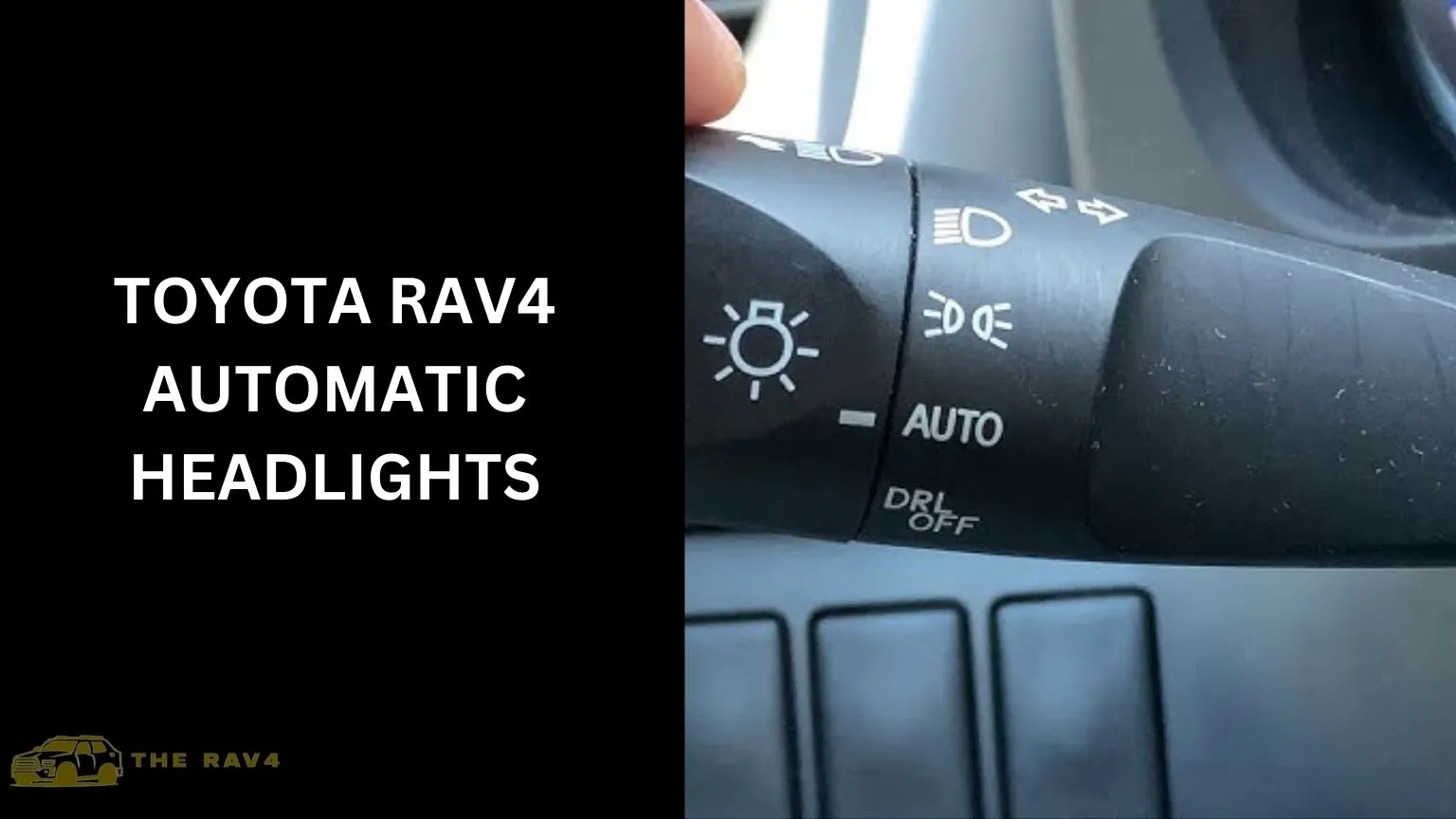
The system operation involved rotating headlight switch to “AUTO” position (marked on switch with “AUTO” or light sensor icon), with system then controlling headlights automatically. When ignition turns off, headlights automatically extinguish after brief delay (approximately 30 seconds) providing temporary illumination while exiting vehicle.
The daytime running lights (DRL) function independently with reduced-intensity headlights or dedicated DRL lamps illuminating during daytime driving regardless of automatic headlight setting, improving vehicle visibility to other drivers during daylight hours.
Manual override remains available by rotating switch to “ON” position forcing headlights on regardless of ambient light, or “OFF” position disabling automatic function requiring manual control. Most drivers leave switch in AUTO position enabling automatic operation under all conditions.
Fourth Generation (2013-2018): Expanded Availability
The 2013-2018 RAV4 made automatic headlights standard on more trims (XLE and higher) while maintaining similar basic functionality as previous generation.
The automatic high-beam feature appeared on 2016+ Limited models using forward camera detecting other vehicles. When activated (pushing high-beam stalk forward to detent position with AUTO indicator illuminated), system manages high beams automatically switching to low beams when camera detects oncoming or preceding vehicles.
The LED headlight option (Limited trim, 2016+) provided superior illumination compared to halogen alternatives while maintaining automatic operation with more precise beam control and instant response versus halogen bulbs requiring warm-up period.
Fifth Generation (2019-Present): Advanced Standard Features
The 2019+ RAV4 includes automatic headlights standard across all trim levels eliminating manual-only operation on base models, with headlight switch permanently in AUTO mode on many models (no longer offering OFF position requiring manual control).
The automatic high-beam similarly becomes standard equipment on all trims (2019+) as part of Toyota Safety Sense 2.0/2.5 suite providing comprehensive driver assistance features including automatic emergency braking, lane departure alert, and adaptive cruise control alongside automatic lighting.
The LED headlights prove standard on XLE Premium and higher trims with halogen remaining on LE/XLE creating notable illumination quality differences:
- Halogen: adequate though yellowish light, slower activation, requires periodic bulb replacement
- LED: bright white light, instant-on response, extremely long life (typically vehicle lifetime without replacement)
The cornering lights (Limited trim) activate additional lamps or adjust LED patterns when turning providing lateral illumination improving visibility during maneuvers.
Proper Operation and Control
Understanding correct automatic headlight usage enables full system capability utilization while avoiding common operational mistakes limiting effectiveness.
Switch Positions and Settings
The headlight control switch (stalk or dial depending on model year) typically offers these positions:
OFF (if available) – Disables automatic headlights requiring manual operation. Note: Many 2019+ RAV4s eliminate this position making automatic operation mandatory.
AUTO – Enables automatic headlight control based on light sensor input. Recommended for typical driving.
Parking lights – Activates only parking lights and taillights without headlights (limited utility in modern driving).
Headlights ON – Forces headlights on regardless of ambient light, useful for tunnels, parking garages, or situations where automatic system doesn’t activate quickly enough.
The recommended setting involves leaving switch in AUTO position for all normal driving, with system managing activation appropriately. Manual override to ON position proves useful only in specific situations where automatic operation proves inadequate.
Automatic High-Beam Operation
Activating automatic high-beam (on equipped models) requires:
- Ensure headlight switch set to AUTO position
- Push high-beam stalk forward to first detent (high-beam flash position)
- Release – stalk returns to normal position with AUTO indicator illuminating on dashboard
- High beams now operate automatically based on traffic detection
Deactivating automatic high-beam:
- Pull high-beam stalk toward steering wheel (low-beam position) disabling automatic operation
- Or push stalk forward again cycling through high-beam modes returning to manual control
Manual high-beam override remains available even with automatic mode active by pushing stalk forward to flash high beams or pulling back for sustained manual high-beam operation.
Dashboard Indicators and Feedback
The automatic headlight indicators include:
Green headlight symbol – Headlights currently on (automatic or manual)
Blue high-beam indicator – High beams currently active
AUTO indicator (if equipped) – Automatic high-beam system active and managing high beam operation
The absence of indicators when headlight switch in AUTO position simply means current ambient light doesn’t require headlight activation, with system monitoring continuously ready to activate when conditions warrant.
Common Problems and Systematic Troubleshooting
Understanding typical automatic headlight failures and their solutions prevents unnecessary dealer visits for minor issues while recognizing when professional service proves necessary.
Headlights Don’t Activate Automatically
The most common complaint involves headlights remaining off despite clearly dark conditions when switch set to AUTO position.
Possible causes include:
Sensor obstruction – Dirt, ice, snow, or objects on dashboard blocking sensor preventing accurate ambient light detection. The sensor typically locates on dashboard top center near windshield base visible as small black dome or clear plastic window.
Solution: Clean sensor area using soft cloth removing any obstructions, clear ice/snow from windshield directly above sensor location.
Blown fuse – Fuse protecting automatic headlight control circuit may have blown disabling automatic function though manual headlight operation might still work.
Solution: Check fuse box (driver’s side lower dash panel typically) locating headlight-related fuses using owner’s manual diagram, replace any blown fuses with proper amperage replacement, investigate why fuse blew if replacement immediately fails again.
Failed light sensor – Sensor itself may have failed from age, moisture intrusion, or electrical damage requiring replacement.
Solution: Professional diagnosis using scan tool checking sensor operation, sensor replacement ($100-$250 including parts and labor at dealer/shop) if confirmed failed.
System disabled in settings – Some RAV4s allow disabling automatic headlights through vehicle settings menu inadvertently turned off.
Solution: Check vehicle settings menu (display screen) for automatic headlight options ensuring feature enabled.
Headlights Activate Too Early or Too Late
Premature activation (headlights turning on during merely cloudy conditions) or delayed activation (headlights not turning on until very dark) suggests calibration problems.
Sensor sensitivity adjustment (if available in vehicle settings) allows customizing activation threshold matching personal preference. However, most RAV4s don’t offer user-adjustable sensitivity requiring acceptance of factory calibration or professional recalibration if severely misadjusted.
Windshield tinting affects sensor operation with very dark tint potentially causing premature headlight activation as sensor detects less ambient light through darkened windshield than actually exists outside. Check local tinting regulations and consider sensor location when applying aftermarket tint avoiding excessive darkness in sensor area.
Automatic High-Beams Not Working
Common automatic high-beam problems:
Dirty camera – Forward-facing camera lens (located near rearview mirror typically) accumulates dirt, bugs, or moisture affecting its ability detecting other vehicles.
Solution: Clean windshield area in front of camera lens, ensure no obstructions blocking camera view of road ahead.
System not activated – Driver forgot activating automatic high-beam function requiring proper stalk operation.
Solution: Follow activation procedure (push high-beam stalk forward to detent, release) ensuring AUTO indicator illuminates.
Poor visibility conditions – System performance degrades in heavy rain, fog, or snow when camera cannot reliably detect other vehicles, automatically disabling high-beam automation and requiring manual control.
Expected behavior: System displays message on dashboard indicating “automatic high-beam unavailable” during poor visibility requiring manual high-beam operation until conditions improve.
Software issues – Automatic high-beam control software may require updating addressing bugs or improving detection algorithms.
Solution: Visit dealer for software update checking whether TSBs (Technical Service Bulletins) address high-beam system improvements.
Headlights Flicker or Cycle Rapidly
Rapid on/off cycling or flickering suggests electrical problems or sensor issues:
Loose electrical connections at headlight switch, light sensor, or headlight assemblies create intermittent contact causing flickering.
Solution: Professional inspection of electrical connections, cleaning/tightening connections or replacing damaged connectors.
Failing bulbs near end of service life sometimes flicker before complete failure particularly with halogen bulbs.
Solution: Replace headlight bulbs (both sides recommended for consistent color/brightness) using quality replacements, typical cost $40-$80 for halogen bulb pair DIY or $100-$200 professional installation.
Sensor malfunction detecting rapid light changes that don’t actually exist creating false triggering.
Solution: Sensor replacement if cleaning doesn’t resolve issue, approximately $100-$250 professional service.
Maintenance and Longevity
Proper automatic headlight system maintenance extends component life preventing premature failures.
Sensor Cleaning and Protection
Monthly sensor cleaning using soft microfiber cloth removing dust, fingerprints, or film from sensor surface maintains accurate ambient light detection. Avoid harsh cleaners or abrasives potentially scratching sensor lens affecting light transmission.
Windshield treatments (Rain-X, similar products) should avoid sensor area as chemical residue might affect sensor operation causing incorrect light level detection.
Dashboard accessories including GPS mounts, phones, or other objects should not block sensor as even partial obstruction affects accuracy. Ensure clear line-of-sight from sensor through windshield to sky.
Bulb Replacement Considerations
LED headlights (standard on XLE Premium and higher 2019+ RAV4s) typically last vehicle lifetime rarely requiring replacement, though LED driver modules occasionally fail ($200-$400 replacement if outside warranty).
Halogen headlight bulbs (standard on LE/XLE 2019+, all lower-spec older models) require periodic replacement approximately every 500-1,000 hours operation translating to 2-4 years for typical usage.
Bulb replacement recommendations:
- Replace both bulbs simultaneously for consistent color and brightness
- Use quality bulbs (Sylvania, Philips, GE) avoiding ultra-cheap alternatives failing prematurely
- Avoid touching bulb glass with bare fingers as skin oils create hot spots causing premature failure
- Consider upgrading to brighter halogen bulbs (within legal limits) if dissatisfied with stock illumination
Professional installation costs $80-$150 typically though DIY proves feasible for mechanically-inclined owners using proper procedures (owner’s manual includes bulb replacement instructions).
System Inspection and Testing
Annual inspection during routine maintenance should verify:
- Automatic headlights activate promptly in dark/tunnel
- High-beam automatic function operates correctly detecting vehicles
- No warning lights or error messages regarding lighting systems
- Lens clarity without excessive yellowing or hazing (older halogen headlights)
- Proper headlight aim preventing excessive glare to oncoming drivers
Headlight restoration (for hazed halogen headlights) costs $80-$150 professional service or $20-$40 DIY using restoration kits, dramatically improving illumination output from halogen systems where lens hazing typically reduces effectiveness 50%+ after 5-7 years.
Comparison with Manual Headlights
Evaluating automatic versus manual headlight benefits helps owners understand system value and when manual override proves preferable.
Automatic Headlight Advantages
Convenience proves primary benefit eliminating need remembering to turn headlights on/off, particularly valuable during rapidly-changing light conditions (approaching storms, tunnel transitions) where manual operation requires constant attention.
Safety improvement as headlights activate reliably during marginal visibility conditions where manual operation might leave headlights off as driver doesn’t consciously recognize need for illumination until visibility seriously degraded.
Reduced battery drain from headlights left on after parking proving impossible with automatic systems that extinguish lights when ignition turns off (after brief delay) versus manual systems where forgotten headlights drain battery overnight.
When Manual Override Proves Preferable
Parking lot safety where manually activating headlights before starting vehicle improves visibility to other drivers and pedestrians during daylight parking lot driving where automatic system might not activate.
Inclement weather when increased visibility proves desirable despite adequate ambient light for automatic activation, with manual override forcing headlights on during rain, fog, or snow improving vehicle visibility to others.
Personal preference timing when driver prefers earlier activation than automatic system provides, manually overriding ensures headlights on when personally desired rather than when system determines necessary.
Conclusion: Maximizing Automatic Headlight Benefits
Toyota RAV4 automatic headlight systems provide genuine safety and convenience benefits through reliable light-level detection and increasingly sophisticated automatic high-beam management that continuously optimizes illumination without requiring constant driver attention. Understanding proper system operation, maintaining sensor cleanliness enabling accurate ambient light detection, and knowing when manual override proves appropriate ensures maximum benefit from automatic features while avoiding frustration from misunderstood operation.
For RAV4 owners, the optimal approach involves leaving headlight switch in AUTO position for typical driving allowing system managing activation appropriately, cleaning sensor monthly maintaining accurate light detection, and utilizing manual override only for specific situations where personal preference differs from automatic system timing. The automatic high-beam feature similarly proves valuable though drivers should remain attentive ensuring appropriate operation during encounters with oncoming traffic, ready to manually override if system response proves inadequate.
The broader context positions automatic headlights as mature proven technology delivering measurable benefits with minimal downside beyond occasional sensor maintenance and understanding proper operation—representing genuinely useful automation that improves rather than complicates the driving experience when properly understood and maintained.