Table of Contents
Toyota RAV4 Catalytic Converter Theft: Comprehensive Guide to Prevention, Impact, and Solutions
The Toyota RAV4, America’s best-selling SUV for multiple consecutive years and a vehicle synonymous with reliability, practicality, and value retention, has become an unwitting protagonist in one of the most widespread and costly property crime epidemics of the 2020s: catalytic converter theft. What began as isolated incidents in specific high-crime areas has metastasized into a nationwide crisis affecting hundreds of thousands of vehicle owners annually, with RAV4 owners finding themselves disproportionately victimized by thieves who can remove a catalytic converter in under three minutes using readily available power tools, then sell the stolen part for $100-$300 to unscrupulous scrap dealers who extract precious metals worth far more.
The catalytic converter theft crisis represents a perfect storm of economic incentives, technological vulnerabilities, enforcement challenges, and market failures. Precious metal prices—particularly rhodium, which peaked above $20,000 per troy ounce in 2021 before settling at $4,000-$5,000 by 2025—create powerful financial motivations for theft. The RAV4’s design characteristics including ground clearance allowing thieves to slide underneath without jacking, standardized exhaust system locations familiar to experienced thieves, and the vehicle’s enormous popularity (400,000+ annual U.S. sales) creating abundant targets in every neighborhood compound the vulnerability. Meanwhile, overwhelmed law enforcement agencies struggle to investigate property crimes they view as lower priorities, while fragmented scrap metal regulations allow stolen converters to enter recycling streams with minimal scrutiny.
For RAV4 owners, catalytic converter theft transforms from abstract crime statistics into immediate crisis when they start their vehicles and hear the deafening roar of unrestricted exhaust gases bypassing the missing converter. The financial impact proves substantial—replacement costs typically range from $1,500-$3,500 depending on model year and whether OEM or aftermarket parts are used, with insurance deductibles often consuming much of this amount. The inconvenience compounds financial costs, as vehicles without catalytic converters cannot legally be driven on public roads in most states, may fail emissions testing required for registration renewal, and suffer drivability problems from disrupted exhaust backpressure and oxygen sensor malfunctions.
Beyond individual victim impacts, catalytic converter theft creates broader societal costs including insurance premium increases as carriers pass claim costs to all policyholders, environmental damage from vehicles operating without emission controls, law enforcement and court system expenses processing theft cases and prosecuting offenders, and the underground economy supporting organized theft rings that often fund other criminal enterprises. These cascading effects make catalytic converter theft not merely a property crime affecting individual victims but a systemic problem requiring coordinated responses from vehicle manufacturers, legislators, law enforcement, scrap metal industries, and vehicle owners themselves.
Understanding the catalytic converter theft epidemic as it affects Toyota RAV4 owners requires examining why catalytic converters contain precious metals worth stealing and how these devices function, what specific RAV4 characteristics make these vehicles particularly attractive theft targets, the scope and scale of the theft epidemic including geographic patterns and organized crime involvement, comprehensive prevention strategies from physical security measures to policy advocacy, the immediate and long-term financial impacts on victims including replacement costs and insurance implications, legal frameworks and enforcement challenges complicating theft prevention and prosecution, and emerging technological and policy solutions that might eventually reduce or eliminate this crime category.
This comprehensive guide provides RAV4 owners with actionable intelligence for protecting their vehicles while also exploring the broader context of why this crime has exploded, what’s being done to combat it, and what the future holds for catalytic converter security.
Understanding Catalytic Converters: Function, Value, and Theft Incentives
Before examining theft-specific issues, understanding what catalytic converters do and why they contain valuable materials explains the fundamental economics driving this crime epidemic.
How Catalytic Converters Work and Why They’re Essential
Catalytic converters are emission control devices mandated on virtually all gasoline-powered vehicles sold in the United States since 1975, positioned in the exhaust system between the engine and muffler where they chemically transform toxic exhaust gases into less harmful emissions before release to the atmosphere. Without catalytic converters, vehicles would emit substantially higher levels of carbon monoxide (a deadly poison), nitrogen oxides (contributors to smog and acid rain), and unburned hydrocarbons (carcinogenic pollutants and smog precursors).
The catalytic conversion process occurs on a substrate coated with precious metal catalysts including platinum, palladium, and rhodium. As hot exhaust gases pass through the converter’s honeycomb structure, these metals facilitate chemical reactions: platinum and palladium catalyze oxidation reactions converting carbon monoxide to carbon dioxide and unburned hydrocarbons to carbon dioxide and water, while rhodium catalyzes reduction reactions converting nitrogen oxides to nitrogen and oxygen. These reactions occur at temperatures of 400-800°F, with the converter reaching full operating efficiency within minutes of engine startup.
Modern three-way catalytic converters simultaneously address all three major pollutant categories—carbon monoxide, hydrocarbons, and nitrogen oxides—through precisely controlled chemical reactions. Upstream oxygen sensors monitor exhaust composition allowing the engine control unit to adjust the air-fuel mixture maintaining stoichiometric combustion (14.7:1 air-to-fuel ratio) where catalytic converters operate most efficiently. Downstream oxygen sensors verify converter performance, with significant differences between upstream and downstream readings indicating converter degradation requiring replacement.
Catalytic converters’ environmental impact proves profound, with these devices reducing vehicle emissions by 90%+ compared to uncontrolled engines. Population-level air quality improvements attributable to catalytic converters include dramatic reductions in urban smog, decreased respiratory disease incidence in cities, lower acid rain formation affecting forests and waterways, and reduced cancer risks from hydrocarbon exposure. These public health benefits justify catalytic converters’ costs and regulatory requirements despite creating the theft vulnerabilities vehicle owners now face.
However, catalytic converters eventually degrade through thermal stress, contamination, and physical damage, typically lasting 80,000-150,000 miles before replacement becomes necessary. Failed converters lose efficiency allowing harmful emissions to pass through unconverted, while physical blockages from melted substrate material can restrict exhaust flow causing engine performance problems, reduced fuel economy, and eventually engine damage from excessive backpressure. Most states require periodic emissions testing to verify converter functionality, with failed tests requiring replacement before registration renewal.
The Precious Metals Inside: Why Converters Are Worth Stealing
Catalytic converters contain platinum, palladium, and rhodium in quantities that seem modest—typically 2-7 grams total across all three metals—but whose value proves substantial given these metals’ extraordinary prices per ounce. As of 2025, platinum trades around $950-$1,050 per troy ounce, palladium at $900-$1,100, and rhodium at $4,000-$5,000 (down from its 2021 peak above $20,000 but still extraordinarily expensive). A converter containing 3 grams of rhodium alone holds $400-$600 worth of this single metal, with additional platinum and palladium potentially bringing total precious metal value to $700-$1,200.
The specific metal content varies by vehicle type, model year, and emission regulations the vehicle must meet. Hybrid vehicles like the Toyota Prius contain higher precious metal loads than conventional vehicles because their catalytic converters operate at lower average temperatures (due to frequent engine shutdowns) requiring more catalyst to maintain efficiency. Vehicles meeting California’s stricter emission standards similarly contain more precious metals than vehicles built to federal standards. Larger engines and trucks typically have larger converters with proportionally more precious metal content.
For the RAV4 specifically, catalytic converter precious metal content typically ranges from 4-8 grams total depending on model year and engine size, with larger 3.5L V6 engines (available in some model years) having more than the standard 2.5L four-cylinder. At current precious metal prices, this translates to $600-$1,200 in recoverable metal value—far more than the $100-$300 thieves typically receive from scrap dealers, but still providing powerful theft incentives given the minimal effort and tools required for removal.
The extraction and refining process for recovering precious metals from stolen converters involves specialized facilities where converters are crushed, the substrate material is separated from metal housings, and the precious metal-coated substrate undergoes chemical processing extracting platinum, palladium, and rhodium. Legitimate recycling facilities performing this extraction maintain careful documentation tracking converter sources and ensuring components come from legal scrap streams. However, unscrupulous operators purchase stolen converters without adequate documentation, providing the market that makes catalytic converter theft profitable.
Precious metal price volatility significantly affects theft rates, with theft incidents closely correlating to rhodium and palladium prices. The 2020-2021 period saw rhodium prices increase from $6,000 to over $20,000 per ounce, accompanied by catalytic converter theft rates increasing 300-500% year-over-year in many jurisdictions. As rhodium prices moderated in 2022-2024, theft rates plateaued or declined slightly but remained far above pre-2020 levels. This price sensitivity suggests that sustained low precious metal prices might eventually reduce theft incentives, though the criminal infrastructure and expertise developed during the theft epidemic’s peak may maintain elevated theft rates even if economic incentives moderate.
The Economics of Catalytic Converter Theft
From a criminal enterprise perspective, catalytic converter theft offers exceptionally attractive economics combining high value relative to effort, minimal skill requirements, low risk of apprehension, and weak criminal penalties even if caught. A thief with a battery-powered reciprocating saw can remove a RAV4’s catalytic converter in 2-3 minutes, working underneath the vehicle in mall parking lots, apartment complexes, or residential streets. Selling to scrap dealers or middlemen yields $100-$300 per converter—$2,000-$6,000 per hour if theft time and driving between targets are included.
Organized theft rings operate far more efficiently than individual opportunistic thieves, with coordinated teams hitting multiple vehicles per night using lookouts, getaway drivers, and specialized extraction tools. These operations might target specific parking lots known to have many RAV4s and other high-value targets, steal 20-30 converters in a single night generating $3,000-$7,000 in proceeds, then sell to connected scrap dealers who don’t ask questions about sourcing. The organizational sophistication sometimes rivals drug trafficking operations, with hierarchies, territory divisions, and violence against competing operations.
The risk-reward calculus overwhelmingly favors theft from criminals’ perspectives. Apprehension probability remains low—perhaps 5-10% of thefts result in arrests—due to the crimes’ brief duration, occurrence in unmonitored areas, and low investigative priority for police departments overwhelmed with violent crimes and other urgent matters. Even when arrested, first-time offenders typically face misdemeanor charges with minimal incarceration, probation, or fines that don’t remotely offset theft proceeds. Repeat offenders might receive felony charges but still face sentences of months rather than years, making imprisonment risk acceptable given the substantial profits.
For victims, the economics prove exactly opposite—high costs with minimal recovery prospects. Replacement catalytic converters cost $1,000-$3,500 depending on whether OEM Toyota parts or aftermarket alternatives are used, plus $300-$800 in labor for removal and installation. Insurance coverage depends on policy types, with comprehensive coverage typically covering theft minus deductibles often equal to $500-$1,000. Victims without comprehensive coverage or those with high deductibles may pay most or all replacement costs personally. The stolen converter’s value to the victim ($1,500-$3,500 replacement cost) far exceeds its value to thieves ($100-$300 scrap proceeds), creating massive deadweight economic losses.
Why Toyota RAV4s Are Prime Targets for Catalytic Converter Theft
While catalytic converter theft affects many vehicle types, RAV4s face disproportionate targeting due to specific design characteristics, market factors, and logistical considerations favoring thieves.
Ground Clearance and Accessibility
The RAV4’s SUV architecture provides ground clearance of 8.4-8.6 inches depending on trim level—sufficient for thieves to slide underneath without jacking the vehicle, dramatically reducing theft time and eliminating the noise and visibility of jack operation. Thieves can simply lay on their backs, slide under RAV4s parked on flat surfaces, and begin cutting without preliminary vehicle lifting. This contrasts with low-slung sedans requiring jacks for access, doubling or tripling theft time and creating more conspicuous activity attracting attention.
The exhaust system’s straightforward routing and catalytic converter location on RAV4s allow experienced thieves to locate and access the target component within seconds. After sliding under the vehicle from the passenger side, the catalytic converter sits in plain view approximately midway along the undercarriage, easily reached with reciprocating saws or cutting torches. Two cuts—one before the converter and one after—separate the component from the exhaust system in 90-180 seconds depending on pipe diameter and cutting tool power, with the converter dropping free for quick removal.
Compared to vehicles with more complex undercarriage shielding or enclosed catalytic converter locations, the RAV4’s relatively open exhaust routing provides easy access. Some luxury vehicles install undercarriage panels protecting catalytic converters behind composite or metal shields requiring removal before accessing the exhaust system. These obstacles add time, require additional tools, and create noise from fastener removal or shield cutting, all factors making these vehicles less attractive targets than RAV4s with completely accessible converters.
The RAV4’s curb weight and suspension characteristics also favor thieves, as the vehicle’s moderate weight (3,400-3,800 lbs depending on drivetrain) on relatively compliant suspension allows thieves to rock vehicles side-to-side on their suspensions slightly, sometimes providing additional clearance space for maneuvering cutting tools. Heavier vehicles with stiffer suspensions provide less movement capability, while lighter vehicles might shift positions when thieves slide underneath, creating complications. The RAV4’s characteristics hit a “Goldwater zone” of accessibility and stability from theft perspectives.
Market Prevalence and Target Abundance
The RAV4’s status as America’s best-selling SUV creates target-rich environments wherever thieves operate. With over 400,000 RAV4s sold annually in recent years and millions in the active vehicle fleet, thieves can locate multiple RAV4s in virtually any shopping center, apartment complex, commuter rail parking lot, or residential neighborhood. This abundance means thieves don’t need to search extensively for targets or travel long distances between vehicles—they can simply move from one RAV4 to the next in the same parking lot, potentially hitting 5-10 vehicles in a single location before relocating.
RAV4 owners’ demographics and parking patterns also create vulnerability. As practical family vehicles and commuter SUVs, RAV4s frequently park in predictable locations including apartment complex parking lots (often poorly lit with minimal security), commuter rail station parking (vehicles left unattended for 8-10 hours during workdays), shopping center parking lots (high traffic creating cover for suspicious activity), and residential street parking (especially in urban areas with limited garage space). These locations offer poor natural surveillance, irregular police patrols, and extended periods where vehicle owners won’t notice theft, providing ideal conditions for criminal operations.
The model’s popularity across diverse geographic areas means theft rings can operate profitably in suburbs, urban centers, and even smaller cities where RAV4 prevalence ensures adequate target availability. Unlike luxury vehicles concentrating in affluent neighborhoods with better security and police response, or work trucks clustering in commercial/industrial areas with different surveillance patterns, RAV4s distribute broadly across residential areas making theft operations sustainable almost anywhere.
Model year universality also benefits thieves, as catalytic converters from 2010s through current model year RAV4s all contain valuable precious metals and use similar exhaust system configurations. Thieves don’t need to identify specific model years or avoid certain vintages—virtually any RAV4 from the past 15 years provides worthwhile targets. This simplifies target selection and allows thieves to operate efficiently without detailed vehicle identification before committing theft.
Converter Value and Scrap Market Demand
RAV4 catalytic converters fetch relatively strong prices in scrap markets due to their precious metal content and the demand from unscrupulous recyclers for converter models they can easily process. While RAV4 converters don’t command the absolute highest prices (Toyota Prius converters can bring $500-$800 due to hybrid vehicles’ higher precious metal loads), they consistently deliver $150-$300 to thieves selling to scrap dealers or middlemen—enough to make theft worthwhile particularly when hitting multiple vehicles per night.
The standardization of RAV4 converters across model years and trim levels creates liquid resale markets where buyers know exactly what they’re receiving and can quote prices instantly without detailed inspection or verification. This contrasts with less common vehicles where scrap dealers might be uncertain about converter contents and offer lower prices reflecting uncertainty premiums. RAV4 converters’ known quantities make transactions quick and reliable from criminals’ perspectives, improving theft economics through reduced transaction costs and pricing certainty.
Scrap dealer networks have developed specialized knowledge and pricing for Toyota converters generally and RAV4s specifically, with some operations posting price lists showing exactly what they pay for various makes and models. While legitimate recyclers maintain documentation and verification procedures deterring stolen goods transactions, a substantial gray-market exists of dealers who purchase without adequate documentation, ask minimal questions about sourcing, and pay cash avoiding paper trails. These complicit buyers provide the essential market infrastructure making theft profitable.
The concentration of precious metal extraction capabilities in relatively few specialized facilities means stolen converters often pass through multiple intermediaries before reaching final processors. Thieves sell to local scrap dealers, who aggregate converters and sell to regional wholesalers, who consolidate shipments to major recycling facilities performing final extraction. Each intermediary in this chain takes a cut, with precious metals’ ultimate value of $700-$1,200 being divided among thieves receiving $100-$300, local scrap dealers receiving $250-$500, regional wholesalers receiving $400-$700, and final processors capturing the remaining margin. This multi-tier market structure provides multiple points where intervention could disrupt the stolen converter pipeline.
The Scope and Scale of the Catalytic Converter Theft Epidemic
Understanding how widespread catalytic converter theft has become and which areas face the highest risks helps contextualize the threat RAV4 owners face.
National and Regional Theft Statistics
National catalytic converter theft reports surged from approximately 16,000 incidents in 2019 to over 65,000 in 2021—more than 300% increase in just two years—before moderating slightly to 55,000-60,000 reported incidents in 2023-2024 as some prevention measures took effect and rhodium prices declined from peak levels. These figures represent only reported thefts; actual incidents likely exceed reported numbers by 30-50% as some victims don’t report thefts to police or insurers, particularly in cases where repair costs fall below insurance deductibles making claims pointless.
Regional variation in theft rates proves substantial, with the West Coast, particularly California, Oregon, and Washington, experiencing the highest per-capita theft rates. California alone accounts for approximately 35-40% of national catalytic converter thefts despite having just 12% of the U.S. population. This concentration reflects several factors: higher population density creating more targets per square mile, generally higher vehicle values and newer fleet composition increasing converter precious metal content, more lenient property crime enforcement in some jurisdictions, and organized theft ring operations with sophisticated networks.
Major metropolitan areas face the most severe theft epidemics, with Los Angeles, San Francisco, Seattle, Portland, Houston, and Chicago leading in absolute theft numbers. However, mid-sized cities and even suburban areas aren’t immune, with theft spreading to virtually all populated regions as criminal networks expanded and techniques became widely known. Some smaller cities experienced temporary theft waves as organized rings traveled through regions hitting hundreds of vehicles over several days before moving to new areas, leaving clusters of victims in their wake.
Certain neighborhoods and locations within cities face disproportionate targeting, including apartment complex parking lots (particularly those with poor lighting and limited security), commuter rail and transit station parking facilities (vehicles left unattended for extended periods), shopping center parking lots (busy areas where suspicious activity blends with normal traffic), hotel parking lots (travelers less likely to notice theft promptly), and residential street parking in dense urban neighborhoods (minimal surveillance and community awareness). These location patterns help explain why some RAV4 owners experience multiple thefts from the same parking areas while others never face the crime despite similar vehicle exposure.
RAV4-Specific Targeting Data
While comprehensive vehicle-specific theft data isn’t universally reported, insurance claim analyses and law enforcement reports consistently identify the RAV4 among the top 5-10 most frequently targeted vehicles for catalytic converter theft. Some insurers report RAV4s generating catalytic converter theft claims at rates 2-3 times their proportion of the overall insured vehicle fleet, indicating they’re being targeted at elevated rates beyond what random selection would predict.
RAV4 owners in high-theft areas report disturbing patterns of repeat victimization, with vehicles being targeted multiple times within months even after converter replacement. This repeat targeting reflects that converters contain full precious metal loads immediately after installation, making recently-repaired vehicles attractive targets for thieves monitoring parking areas where previous thefts occurred. Some victims report three or more thefts from the same vehicle over 12-18 months, creating cascading financial and practical impacts that drive some owners to sell vehicles out of frustration.
Model year targeting shows some variation, with 2015-2023 RAV4s facing the highest absolute theft numbers reflecting these models’ prevalence in the active fleet, while older 2005-2010 RAV4s face elevated per-vehicle theft rates in some areas as thieves perceive older vehicles as less likely to have anti-theft protection installed. The current-generation RAV4 (2019-present) faces particularly high targeting due to its enormous sales success creating abundant targets and relatively high ground clearance on the latest generation providing excellent access.
Organized Crime Involvement and Interstate Operations
Law enforcement investigations reveal that much catalytic converter theft involves organized criminal operations rather than individual opportunistic thieves, with rings operating across multiple states coordinating theft activities, converter transportation, and scrap market sales. Some operations function like franchises with territorial divisions, standardized operating procedures, and hierarchical management structures directing individual theft crews and managing scrap dealer relationships.
Interstate trafficking networks transport stolen converters from theft locations to scrap dealers in states with weaker regulations or enforcement, complicating law enforcement efforts since theft jurisdiction, converter possession location, and final sale location might involve three different states with minimal coordination. Federal involvement through agencies like FBI and Department of Justice has increased, treating major theft ring operations as organized crime enterprises subject to federal RICO statutes, but resources remain limited relative to the problem’s scale.
Violence associated with catalytic converter theft has escalated, with multiple documented cases of thieves confronting vehicle owners who interrupt thefts, resulting in assaults and in several instances murders when confrontations turn violent. Thieves operating under vehicles are vulnerable to being trapped if vehicles are started or moved, creating desperate situations sometimes leading to violence. <a href=”https://www.nicb.org/news/blog/catalytic-converter-theft”>The National Insurance Crime Bureau</a> advises against confronting suspected thieves, recommending instead calling police and observing from safe distances.
The organized nature of major theft operations creates both challenges and opportunities for law enforcement. Challenges include sophisticated counter-surveillance, rapid adaptation to enforcement tactics, and violence capabilities when operations are threatened. Opportunities include that taking down major operations might substantially reduce theft rates regionally, whereas targeting individual thieves produces minimal impact as new thieves replace those arrested. Successful prosecutions of major theft rings in 2023-2024 appeared to correlate with theft rate declines in specific regions, suggesting focused enforcement against organizations rather than individual thieves might prove more effective.
Comprehensive Prevention Strategies for RAV4 Owners
While no single preventive measure guarantees protection against determined thieves, implementing multiple security layers substantially reduces theft risk and directs criminals toward less-protected targets.
Physical Security Devices and Deterrents
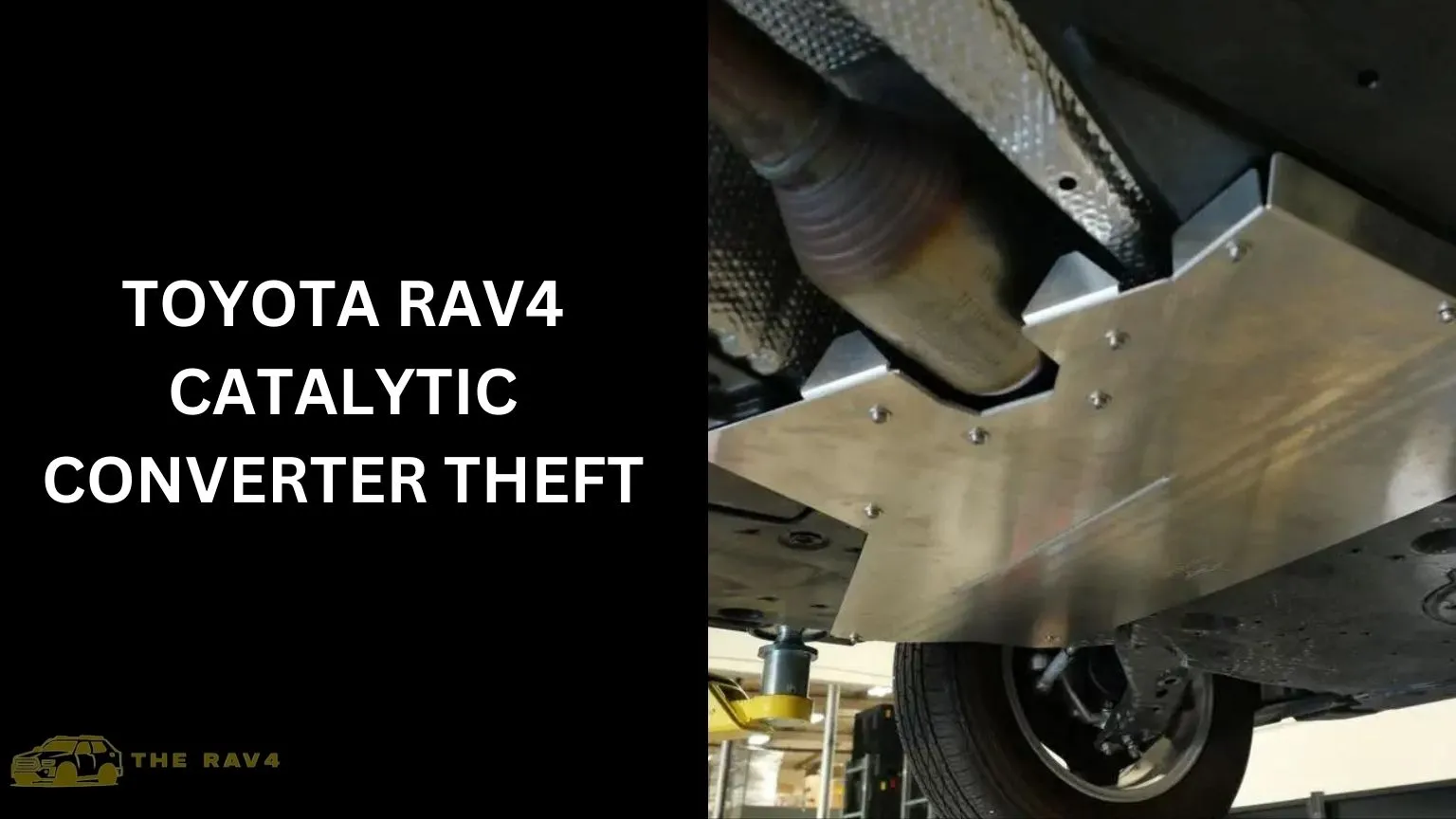
Catalytic converter shields and cages represent the most effective physical protection, consisting of metal plates or cages installed around the catalytic converter creating barriers that prevent or significantly delay converter access. High-quality shields use 1/4-inch or thicker steel plates bolted to the vehicle’s frame with tamper-resistant fasteners, while cage designs surround the converter with steel mesh or bars that cutting tools cannot easily penetrate. These devices don’t make theft impossible but increase the time required from 2-3 minutes to 15-30 minutes, deterring thieves who prefer quick operations minimizing exposure.
For RAV4s specifically, several aftermarket companies produce model-specific catalytic converter protection systems designed to fit precisely without requiring extensive modification or compromising ground clearance and departure angles. Products like MillerCAT’s Cat Shield or CatClamp systems range in price from $150-$500 depending on design complexity and installation difficulty, with professional installation adding $100-$300 in labor costs. While representing significant expense, these protection devices cost less than insurance deductibles for replacement, making them economically rational even before considering the inconvenience and lost time from theft.
Installation quality significantly affects protection effectiveness, with poorly installed shields potentially causing exhaust rattles, inadequate protection if gaps allow tool access, or even exhaust system damage if shields contact moving components. Professional installation by shops familiar with specific products and RAV4 undercarriage characteristics provides highest reliability, though mechanically-inclined owners can install some systems using common hand tools following detailed instructions. The key installation consideration involves ensuring fasteners are inaccessible to thieves or require specialized tools for removal, preventing shields from being removed as easily as unprotected converters.
Marking systems provide complementary protection by etching vehicle identification numbers (VINs) or other identifying information onto catalytic converters, theoretically making them identifiable as stolen if recovered and deterring thieves who face greater difficulty selling marked converters to legitimate scrap dealers. Various programs exist where law enforcement agencies, dealerships, or muffler shops provide free or low-cost converter marking using engraving tools or high-temperature paint. However, marking’s deterrent effect remains uncertain, as unscrupulous scrap dealers might ignore markings or thieves might target unmarked vehicles preferentially.
Paint marking with high-temperature bright-colored paint creates visible indicators that converters have been marked, potentially deterring thieves who spot painted converters during target selection. Some police departments promote community-wide marking events painting converters bright orange or pink with accompanying VIN documentation, creating neighborhood-level deterrence if enough vehicles participate that thieves perceive most vehicles as marked. However, paint can be removed or painted over, limiting marking’s effectiveness against determined or unsophisticated thieves who don’t consider resale complications.
Parking and Behavioral Strategies
Parking location choices dramatically affect theft risk, with garages providing the most protection by denying access to vehicles’ undersides. RAV4 owners with garage access should prioritize parking vehicles inside overnight and during extended daytime absences, even if garages are cluttered or parking is less convenient than street/driveway options. Single-car garages might require household vehicle rotation where the RAV4 receives priority garage parking while other vehicles park outside, recognizing the RAV4’s elevated theft risk.
For those without garage access, parking in well-lit, high-traffic areas provides the next-best protection by increasing the probability that thieves will be observed during theft attempts. Motion-activated lighting, security cameras (even dummy cameras providing visible deterrence), and parking near building entrances or security stations all reduce theft risk. Conversely, parking in dark corners of lots, against walls or fences restricting approach angles, or in remote areas should be avoided. Thieves prefer locations where they can work unobserved, making visibility their enemy and your protection.
Parking in groups or against walls can complicate converter access, with vehicles tightly grouped limiting space for thieves to maneuver underneath or position cutting tools. Parking the passenger side (where exhaust systems route on RAV4s) against walls or adjacent vehicles denies access to the converter from the easiest approach angle, though determined thieves can work from the driver’s side with slightly more difficulty. Some apartment complex residents coordinate parking strategies positioning RAV4s against curbs or in corner spots limiting access angles.
Installing motion-activated alarms or cameras near regular parking locations provides both deterrence and evidence if thefts occur. Inexpensive wireless security cameras with motion detection can be positioned viewing parking areas from residences or garages, with 24/7 recording to cloud storage preserving evidence for police investigation and insurance claims. Motion-activated lights serve dual purposes of theft deterrence and convenience for owners accessing vehicles at night. These environmental controls prove particularly valuable in apartment complexes or neighborhoods where multiple RAV4 owners share parking areas and can coordinate security improvements.
Varying parking locations and schedules reduces predictability that organized theft operations exploit when scouting target-rich areas. If you regularly park in the same commuter rail lot or shopping center, thieves might identify your vehicle as a reliable target. Occasionally using alternative parking, varying arrival and departure times, or moving vehicles to different spots within large lots makes your vehicle a less consistent target compared to vehicles parked identically every day.
Vehicle-Based Security Systems
Aftermarket alarm systems with undercarriage sensors can detect movement or vibration occurring when thieves begin cutting exhaust pipes, triggering loud alarms intended to scare thieves away and alert owners or bystanders. These systems require professional installation integrating with vehicle electrical systems, costing $300-$800 depending on sensor sophistication and alarm features. The deterrent effectiveness depends on whether thieves flee when alarms sound—experienced thieves might ignore alarms gambling they can complete theft before anyone responds, while less experienced criminals might abandon attempts.
Dash cameras with parking mode recording continuously monitor vehicle exteriors when parked, potentially capturing thieves’ faces, vehicle information, and theft methods providing valuable evidence for police investigation and insurance claims. High-end dash cameras with motion detection can activate recording and alert owners via smartphone when activity is detected near vehicles, potentially enabling real-time response. However, cameras provide evidence rather than prevention—thieves might be recorded but converters remain stolen, making cameras most valuable when combined with other protective measures.
GPS tracking devices attached to catalytic converters enable recovery if theft occurs and tracking devices remain with stolen converters, though sophisticated thieves might detect and remove tracking devices or sell converters quickly enough that tracking information doesn’t aid recovery. Apple AirTags or similar consumer tracking devices have been adapted for converter tracking by enterprising owners, though these devices’ limited range and dependence on nearby iPhones for location reporting limits effectiveness if converters are transported to areas without dense iPhone user populations.
Factory vehicle alarm systems generally provide inadequate protection against catalytic converter theft since they’re designed to detect vehicle entry or towing rather than undercarriage activity. Cutting exhaust pipes doesn’t trigger door sensors, motion detectors (which might be positioned to ignore undercarriage movement preventing false alarms), or ignition systems, allowing thieves to remove converters without triggering factory alarms. Aftermarket alarm modifications specifically calibrated for detecting converter theft prove necessary for electronic deterrence.
Financial Impact: Costs and Insurance Considerations
Understanding the full financial implications of catalytic converter theft helps RAV4 owners make informed decisions about protection investments and insurance coverage.
Replacement Costs and Repair Options
OEM Toyota catalytic converter replacement represents the highest-quality but most expensive option, with genuine Toyota parts costing $1,500-$2,500 for the converter itself plus $300-$800 in labor for exhaust system removal, converter installation, and system testing. OEM converters guarantee fit, performance, and durability matching original equipment, maintain vehicle warranty coverage, and typically last the longest before requiring replacement. However, the high costs exceed many insurance deductibles, meaning victims bear most or all expenses even with comprehensive coverage.
Aftermarket catalytic converters offer lower-cost alternatives ranging from $400-$1,200 depending on quality tier, potentially reducing total repair costs to $800-$1,800 with labor. However, aftermarket quality varies enormously, with budget options sometimes failing emissions testing, lasting just 20,000-30,000 miles before requiring replacement, or triggering check engine lights from inadequate oxygen sensor performance. Higher-quality aftermarket converters from reputable manufacturers (Magnaflow, Walker, etc.) approach OEM performance at 20-40% cost savings, representing reasonable compromises between affordability and reliability.
Some victims opt for “universal” catalytic converters that aren’t model-specific but can be adapted to various vehicles through custom welding and pipe fabrication. These save additional costs on the converter itself ($200-$500) but require skilled welding increasing labor charges and sometimes compromising fit or performance. Universal converters rarely match OEM performance or longevity, making them viable primarily for older, high-mileage vehicles where owners prioritize minimal repair costs over longevity or optimal performance.
The labor component of replacement includes: Exhaust system removal requiring cutting or removing rusted fasteners connecting pipe sections (1-2 hours), converter installation involving welding or clamping new converter to exhaust pipes ($150-$300), oxygen sensor replacement if sensors are damaged during theft or repair (add $100-$200), and exhaust system testing ensuring no leaks and proper backpressure ($50-$100). Labor rates vary regionally from $80-$150 per hour, with the entire repair typically requiring 3-5 hours generating $300-$800 in labor charges.
Additional costs might include: Exhaust system damage beyond the converter if thieves cut additional pipes or hangers (add $200-$500 for additional pipes and hangers), oxygen sensor damage from rough handling during theft requiring replacement, undercarriage damage if thieves damage fuel lines, brake lines, or wiring harnesses while working underneath vehicles, and emissions testing fees in states requiring post-repair verification that vehicles meet emissions standards ($50-$150).
Insurance Coverage and Claims Process
Comprehensive auto insurance coverage typically covers catalytic converter theft, as this coverage addresses non-collision damage to vehicles including theft, vandalism, fire, and weather damage. However, liability-only policies or those with just collision coverage won’t cover converter theft, leaving owners responsible for full replacement costs. RAV4 owners without comprehensive coverage should strongly consider adding it given theft prevalence, though premiums increase $200-$800 annually depending on vehicle value, location, and deductible selections.
Deductibles significantly affect out-of-pocket costs, with typical comprehensive deductibles ranging from $250 to $1,000. If replacement costs $2,000 and your deductible is $1,000, insurance pays just $1,000 while you pay $1,000 personally plus suffer deductible loss. If replacement costs $1,800 and your deductible is $1,000, filing a claim provides only $800 in benefit while creating claims history potentially increasing future premiums. This math sometimes makes filing claims economically irrational despite having coverage, with victims paying for repairs out-of-pocket to avoid claims history implications.
Claims history affects future insurance premiums and even coverage availability, with multiple comprehensive claims over short periods potentially causing premium increases of 10-30% or insurers non-renewing policies forcing customers to find new carriers at potentially higher rates. The insurance industry views frequent claims—even comprehensive claims where policyholders aren’t at fault—as indicating higher future claim risk justifying premium increases or coverage restrictions. Victims experiencing repeat thefts might find themselves in insurance trouble despite being crime victims rather than negligent operators.
The claims process for catalytic converter theft requires: Immediate police report filing documenting the theft for insurance and law enforcement purposes, contacting your insurance company within 24-48 hours reporting the theft and initiating claims process, obtaining repair estimates from approved repair facilities or allowing insurance adjusters to assess damage, selecting repair shops and converter quality (OEM vs. aftermarket) subject to insurance approval, and coordinating repairs, rental car coverage during repair period, and final payment between insurance and repair shops.
Some insurers have introduced specific policy provisions addressing catalytic converter theft including sublimits capping coverage at $1,000-$2,500 regardless of actual repair costs, requirements for anti-theft device installation as coverage prerequisites, or premium discounts for vehicles with documented catalytic converter protection. These provisions reflect the theft epidemic’s impact on insurance companies’ loss experience and their attempts to manage risk through policy terms and incentivizing prevention.
Prevention Investment Cost-Benefit Analysis
Evaluating whether preventive investments make financial sense requires comparing prevention costs against expected theft losses accounting for theft probability. If catalytic converter shields cost $400 installed, replacement costs $2,000 with a $1,000 deductible creating $1,000 out-of-pocket loss, and annual theft probability in your area is 3%, the expected annual loss without protection is $30 (3% × $1,000). The $400 prevention investment requires 13+ years to break even based purely on prevented financial losses ($400 ÷ $30 = 13.3 years).
However, this narrow financial calculation ignores several important factors making prevention more attractive than simple math suggests. The inconvenience and lost time from theft (rental cars, repair scheduling, dealing with insurance) have substantial value beyond direct financial costs. The emotional toll and violation feelings from theft victimization carry psychological costs. The risk of repeat victimization makes single-theft probabilities understate actual exposure. And prevention provides peace of mind worth paying for beyond purely financial calculations.
For RAV4 owners in high-theft areas, the prevention calculation becomes more compelling. If you park in an apartment complex that has experienced 10 converter thefts in the past year from 200 parked vehicles, your annual theft probability might approach 5-8% rather than 3%, increasing expected losses to $50-$80 annually and reducing prevention investment payback to 5-8 years. If you’ve already experienced one theft making repeat victimization more likely, prevention investments become even more justified.
Group purchase programs through RAV4 owner communities or apartment complexes can reduce per-vehicle protection costs through bulk pricing from installers, making prevention more economical. If a complex with 20 RAV4s coordinates installation, per-vehicle costs might drop from $400 to $250-$300 through volume discounts, improving cost-benefit while also creating neighborhood-level deterrence effects if thieves perceive most vehicles as protected.
Legal Frameworks and Enforcement Challenges
Understanding the legal landscape surrounding catalytic converter theft helps explain why this crime persists despite obvious harm and reveals what policy changes might help combat it.
Criminal Penalties and Prosecution Challenges
Catalytic converter theft is typically charged as theft, grand theft, or possession of stolen property depending on jurisdiction and circumstances, with penalty severity based on stolen property value. Since converters themselves are worth $100-$300 as scrap (despite replacement costs of $1,500-$3,000), charges sometimes fall in misdemeanor rather than felony categories in jurisdictions with high felony thresholds. First-time offenders often receive probation, short jail sentences, or minimal fines, providing inadequate deterrence given theft’s profitability.
Some states have enacted catalytic converter-specific theft statutes creating enhanced penalties recognizing these crimes’ impacts beyond stolen part values. California AB 1740 (effective 2022) made it illegal for recyclers to purchase catalytic converters from non-licensed sellers and increased penalties for organized theft operations. Washington, Oregon, Colorado, and other states passed similar legislation creating converter purchase documentation requirements and enhanced criminal penalties. However, implementation and enforcement vary widely, with some jurisdictions actively pursuing these cases while others treat them as low-priority property crimes.
Proving theft cases presents challenges since possessing a catalytic converter isn’t inherently criminal absent proof it was stolen. Unless thieves are caught in the act of removal or with vehicles containing stolen converters plus cutting tools indicating criminal intent, prosecuting simple converter possession proves difficult. Some jurisdictions have begun charging “possession of catalytic converters without proof of lawful acquisition” as criminal offenses, but these laws face constitutional challenges around presumption of innocence and burden of proof.
Organized theft ring prosecutions offer better deterrence when successful, as leaders face RICO charges, conspiracy charges involving multiple participants, and sentences potentially reaching 5-15 years in federal prison. However, these cases require extensive investigation, coordination across jurisdictions, and sufficient resources that overwhelmed law enforcement agencies struggle to allocate. Only the most prolific operations generating clear public concern typically receive investigation resources necessary for these complex prosecutions.
Scrap Metal Dealer Regulations and Compliance
The resale market for stolen converters depends critically on scrap metal dealers’ willingness to purchase converters without adequate documentation, making dealer regulation essential to theft prevention. Strong regulations require dealers to obtain seller identification, document converter sources with vehicle information, photograph sellers and converters, report transactions to law enforcement databases, and maintain records available for inspection. Some jurisdictions mandate waiting periods between purchase and processing preventing rapid laundering of stolen goods.
However, compliance and enforcement vary dramatically, with some dealers strictly following regulations while others operate in legal gray areas or openly violate requirements. Regulators in most jurisdictions have limited resources for inspecting dealers and pursuing violations, creating lax enforcement environments. The profit margins on converter purchases incentivize dealers to ask minimal questions, with complicit dealers viewing fines as business costs rather than deterrents. Federal regulation could create more uniform standards and better enforcement, though Congressional action on this issue has stalled repeatedly.
Interstate commerce in converters complicates enforcement, as converters stolen in states with strong dealer regulations can be transported to states with weak regulations for sale, or shipped across borders for international recycling. Some theft operations specifically transport converters to Mexico or Canada for sale, placing them entirely outside U.S. regulatory reach. Federal coordination and interstate agreements might address these jurisdiction arbitrage opportunities, but implementation faces political and practical challenges.
Legitimate dealers support stronger regulations recognizing that complicit competitors conducting illegal business create unfair competitive advantages and harm the industry’s reputation. Trade associations representing responsible scrap dealers have advocated for enhanced regulation, standardized documentation requirements, and law enforcement partnerships deterring illicit transactions. However, the existence of a large gray-market dealer segment undermines these efforts, making comprehensive reform dependent on eliminating demand from unscrupulous operators.
Emerging Legislation and Policy Proposals
Many states have introduced or passed catalytic converter theft bills in recent years addressing various aspects of the crime including <a href=”https://www.ncsl.org/transportation/catalytic-converter-theft-state-laws”>enhanced criminal penalties</a> for converter theft and possession, mandatory scrap dealer licensing and transaction documentation, prohibition on cash payments for converters requiring checks providing paper trails, and requirements for dealers to verify sellers are legitimate businesses or vehicle owners. The effectiveness of these laws depends heavily on implementation, funding for enforcement, and penalties sufficient to deter violations.
Federal legislation has been proposed including the “Preventing Auto Recycling Theft (PART) Act” creating national standards for converter tracking and documentation, but has not yet passed due to disputes over regulatory scope, federal versus state enforcement roles, and industry concerns about compliance costs. Federal action could provide more uniform protection than the current patchwork of state laws where criminals simply operate in weak-regulation states, though political consensus for federal intervention in this area remains elusive.
Manufacturer design changes might address vulnerability at its source by relocating catalytic converters to more protected locations inside engine compartments or behind shields, using lower-value catalyst formulations maintaining emissions performance with less precious metal content, or integrating converters with other exhaust components making removal more complex. However, these design changes would only affect new vehicles leaving the millions of existing RAV4s and other vulnerable vehicles unprotected. Some manufacturers have begun implementing such changes on newer models, though widespread adoption remains limited.
Insurance industry initiatives including coverage incentives for protective measures, partnerships funding community marking or shield installation programs, and data sharing helping identify high-theft locations and rings show promise for reducing theft through private-sector action. However, insurers’ primary focus remains managing their own losses rather than solving the broader social problem, limiting how much they’ll invest beyond narrow commercial interests.
Technological and Market Solutions on the Horizon
Beyond current prevention measures and legal reforms, emerging technologies and market developments might eventually reduce catalytic converter theft’s prevalence or even eliminate the crime category entirely.
Alternative Catalyst Technologies and Precious Metal Reduction
Automotive research is exploring alternative catalyst materials requiring less platinum, palladium, and rhodium while maintaining emissions performance, potentially reducing converters’ theft attractiveness. Developments include base metal catalysts using cobalt, nickel, iron, or copper compounds potentially replacing platinum-group metals in some applications; nanotechnology approaches creating more surface area with less material achieving equivalent catalytic performance with 30-50% less precious metal; and selective catalytic reduction systems for nitrogen oxides using alternative chemistries rather than rhodium. These technologies remain primarily in development, with widespread commercial deployment years or decades away.
Hybrid and electric vehicle proliferation might reduce converter theft long-term as electrified powertrains become dominant. Battery electric vehicles require no catalytic converters eliminating theft risk entirely, while plug-in hybrids’ catalytic converters often contain less precious metal due to reduced engine operation hours. As the vehicle fleet electrifies over coming decades, the vulnerable vehicle population shrinks, potentially making converter theft less prevalent. However, this transition occurs over 15-25 years as existing gasoline vehicles are gradually retired, leaving extended periods where millions of vulnerable vehicles remain in service.
Synthetic biology and bacterial catalyst research explores using genetically engineered bacteria performing catalytic functions currently requiring precious metals, potentially enabling biological emission control systems with minimal metal content. While fascinating from scientific perspectives, practical automotive applications face enormous challenges around temperature tolerance (exhaust systems reach 1,000°F+), durability, and maintaining bacterial cultures in operational vehicles. These approaches remain highly speculative with no clear path to commercial viability.
Advanced Security Technologies and Integration
Factory-installed catalytic converter security systems represent the most promising near-term solution, with manufacturers beginning to integrate anti-theft features on new vehicles. These systems might include physical shields installed during manufacturing (more difficult to retrofit than install originally), alarm integration detecting undercarriage disturbance, RFID tags or other tracking technologies in converters, and exhaust system designs making converter removal more complex. Toyota and other manufacturers facing high theft rates on their models have incentives to implement such features both for customer protection and as competitive advantages in theft-prone markets.
Vehicle-to-cloud connectivity enables theft detection and notification systems alerting owners immediately when suspicious activity occurs. Advanced implementations might involve accelerometers detecting unusual vehicle movement, audio sensors recognizing cutting sounds, or chassis strain gauges detecting jacking or lifting. Cloud integration allows immediate smartphone notifications even when owners are far from vehicles, potentially enabling intervention before thefts complete. However, these systems require either factory integration or complex aftermarket installation limiting widespread adoption.
Blockchain-based converter tracking could create immutable records documenting converter ownership and transaction chains, making stolen converters identifiable and eliminating legitimate resale channels. Every converter would receive unique identification linked to specific vehicles, with all sales and transfers recorded on distributed ledgers preventing title washing or documentation forgery. While technically feasible, implementing such systems requires coordination across manufacturers, recyclers, scrap dealers, and law enforcement exceeding what current industry fragmentation allows.
Economic and Market Shifts
Precious metal price declines would reduce theft incentives potentially bringing theft rates down naturally without requiring enforcement or technological solutions. Rhodium’s decline from $20,000+ in 2021 to $4,000-$5,000 in 2025 already contributed to theft rate moderation in some regions. If alternative applications for platinum-group metals reduce demand, increased mining production expands supply, or recycling initiatives recover more metals from end-of-life vehicles, prices might fall further reducing theft’s profitability to levels where criminal risks exceed rewards.
Legitimate converter recycling programs paying competitive rates for end-of-life converters from documented sources could compete with stolen converter markets, reducing demand for illicit goods. If vehicle owners could receive $200-$400 for old converters when replacing vehicles or repairing exhaust systems through legitimate channels, the supply of legal converters might partially satisfy recycler demand reducing stolen converter purchases. Some manufacturers and recyclers have launched such programs, though scaling them to compete with illicit markets requires substantial investment and coordination.
Public awareness campaigns reducing theft opportunities through communal vigilance might create cultural shifts where suspicious activity underneath vehicles triggers immediate reporting and intervention. Community programs promoting converter marking, shield installation, and parking coordination combined with neighborhood watch systems increase theft risks for criminals potentially deterring operations. However, sustaining community engagement on this issue proves challenging given the many competing demands on residents’ attention and resources.
Conclusion: Protecting Your RAV4 in a High-Theft Environment
Catalytic converter theft represents a frustrating crime epidemic affecting hundreds of thousands of vehicle owners annually, with RAV4 owners facing disproportionate targeting due to their vehicles’ design characteristics, market prevalence, and converter value. While no single solution guarantees protection, RAV4 owners can substantially reduce their theft risk through layered security approaches combining physical protection devices, strategic parking choices, insurance optimization, and community coordination.
The most effective individual protection involves installing high-quality catalytic converter shields or cages providing physical barriers that dramatically increase theft time from 2-3 minutes to 15-30 minutes, deterring thieves seeking quick operations. While these devices cost $300-$600 installed, they prove less expensive than insurance deductibles and dramatically less expensive and inconvenient than experiencing actual theft. For RAV4 owners in high-theft areas or those parking in vulnerable locations, shields represent essential security investments worthy of prioritization.
Behavioral strategies supplement physical protection, with garage parking providing optimal security and well-lit high-visibility parking offering substantial protection when garages are unavailable. Varying parking locations and schedules reduces predictability, while participating in community security initiatives creates neighborhood-level deterrence. These strategies require minimal financial investment but meaningful behavioral changes, making them accessible protection approaches for owners who cannot afford physical security devices or operate in rental situations preventing vehicle modifications.
Insurance considerations merit careful attention, ensuring comprehensive coverage exists with deductibles low enough that claims provide meaningful benefits. RAV4 owners should explicitly discuss catalytic converter theft with insurance agents, confirming coverage terms, understanding deductible implications, and exploring whether insurers offer premium discounts for documented anti-theft device installation. Filing claims strategically—only when benefits substantially exceed deductibles—prevents unnecessary claims history affecting future premiums.
The broader solution requires coordinated action from manufacturers implementing better factory security, legislators enacting stronger regulations of scrap dealers and enhanced criminal penalties, law enforcement prioritizing organized theft ring investigations over individual thieves, and communities organizing collective security efforts. Individual owners’ protection efforts should complement advocacy for systemic solutions addressing root causes rather than just treating symptoms.
For RAV4 owners facing immediate theft risk, the action priorities are clear: install physical protection devices if financially feasible, optimize parking strategies for maximum visibility and minimal vulnerability, verify insurance coverage adequacy and consider lowering deductibles, document your vehicle and converter with photos and VIN etching, and connect with local RAV4 owner communities sharing information about theft hotspots and effective protection measures. These concrete steps provide real protection while broader solutions develop.
The catalytic converter theft epidemic eventually will subside through some combination of regulatory improvements, security technology advancement, precious metal price changes, vehicle electrification, and criminal network disruptions. Until that eventual resolution arrives, RAV4 owners must navigate a threatening environment requiring vigilance, investment in protection, and mutual support among affected communities facing this frustrating and costly crime.