Table of Contents
The Toyota RAV4 Prime represents one of the automotive industry's most compelling vehicles, combining the practical versatility of America's best-selling SUV with plug-in hybrid technology delivering 42 miles of electric-only range, 94 MPGe efficiency, 302 combined horsepower creating 5.7-second 0-60 acceleration rivaling performance sedans, and eligibility for federal tax credits up to $7,500 plus various state incentives potentially totaling another $1,000-$5,000. This combination of practicality, efficiency, performance, and financial incentives creates overwhelming demand that has consistently exceeded Toyota's production capacity since the Prime's 2021 introduction, resulting in waiting lists, dealer markups, and limited inventory making Prime purchases challenging even for committed buyers.
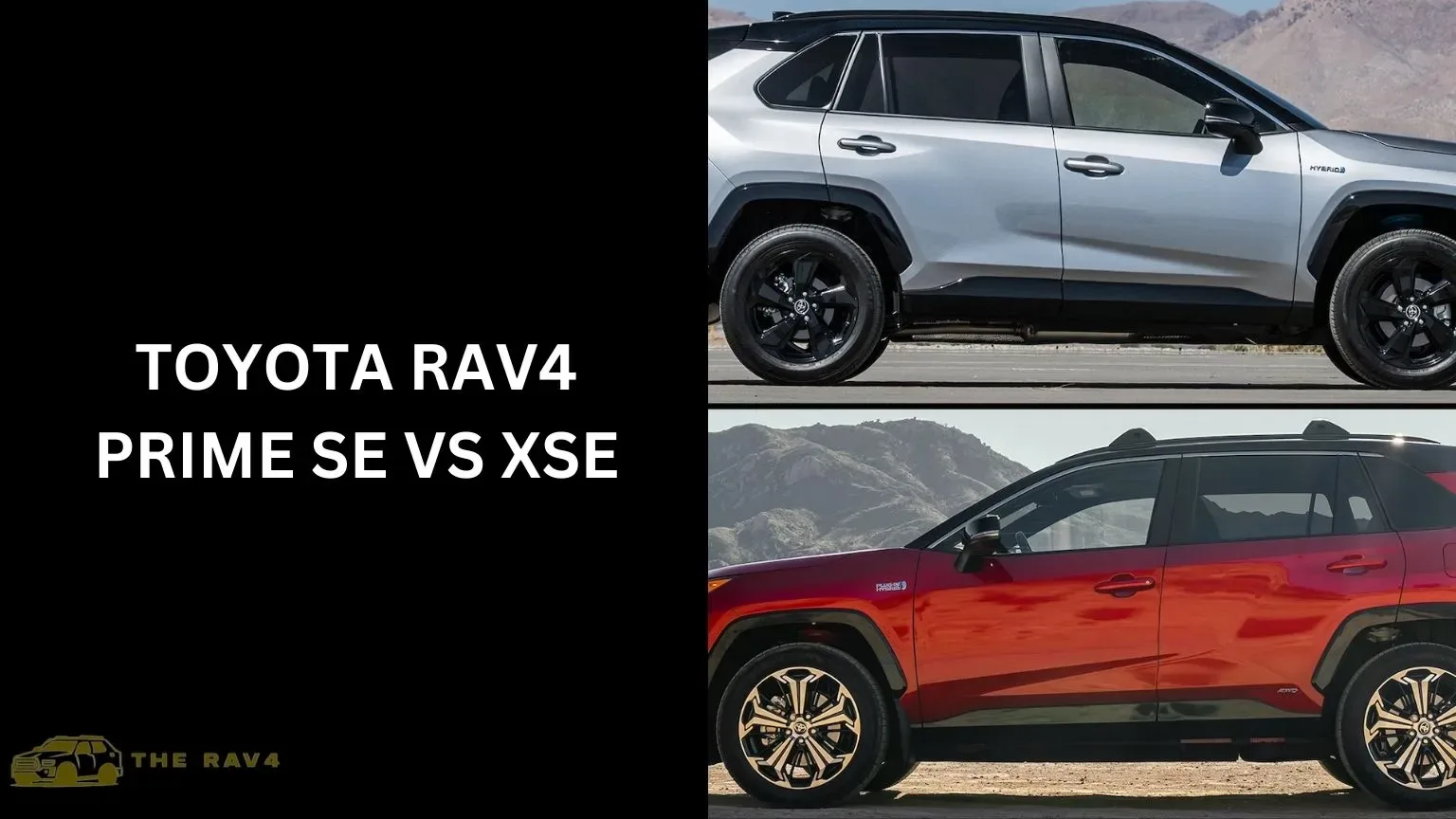
Within the RAV4 Prime lineup, the SE and XSE trims represent the only two available configurations, creating a straightforward yet consequential decision for buyers fortunate enough to secure Prime allocation. Unlike conventional vehicle lineups offering 5-7 trim levels spanning base economy to luxury configurations, the Prime's binary choice simplifies decision-making while intensifying the importance of understanding exactly what differentiates these trims and whether the XSE's approximately $3,500-$4,000 premium delivers sufficient additional value justifying its higher cost, longer likely wait times (as XSE models are produced in lower volumes), and modestly reduced efficiency from heavier equipment loads.
The challenge for Prime buyers involves evaluating this trim decision amid unique market dynamics where dealer availability constraints, federal tax credit eligibility rules, state incentive variations, and individual usage patterns all factor into the value equation alongside the actual feature differences between SE and XSE configurations. A buyer who qualifies for full federal credits plus generous California state incentives faces different financial calculations than a buyer in a state without additional incentives, while a buyer planning extensive electric-only commuting values different features than one primarily using the Prime for occasional electric operation with mostly hybrid driving.
This comprehensive guide examines every dimension of the RAV4 Prime SE versus XSE decision including detailed feature-by-feature comparison cataloging every difference between trims, performance and efficiency analysis showing how equipment variations affect real-world capability, total cost of ownership calculations incorporating purchase prices, incentives, insurance, and operating costs, usage pattern matching helping buyers align trim selection with actual driving needs, and practical purchasing guidance navigating the challenging Prime acquisition process. Whether you're currently deciding between SE and XSE trims, evaluating whether the Prime justifies its premium over standard RAV4 Hybrid, or simply curious about what makes this PHEV so compelling despite limited availability, this guide provides complete transparency for informed decision-making.
Understanding RAV4 Prime Positioning and Value Proposition
Before comparing SE and XSE trims, understanding the RAV4 Prime's overall positioning within Toyota's lineup and the broader plug-in hybrid market provides essential context for evaluating its value and appeal.
RAV4 Prime vs. Standard RAV4 Hybrid
The RAV4 Prime uses an enhanced plug-in hybrid system building on the standard RAV4 Hybrid's proven powertrain but adding a substantially larger battery pack (18.1 kWh versus 1.6 kWh), more powerful electric motors, and plug-in charging capability enabling 42 miles of electric-only driving. This creates fundamentally different capabilities—the standard Hybrid operates primarily as a gasoline vehicle with electric assist improving efficiency, while the Prime can function as a pure electric vehicle for typical daily commutes before reverting to hybrid operation once battery depletes.
The performance advantage proves dramatic, with the Prime's 302 combined horsepower (versus Hybrid's 219 hp) creating 5.7-second 0-60 acceleration that's 2+ seconds faster than the already-capable Hybrid. This transforms the RAV4 from adequately powered to genuinely quick, rivaling sport sedans while maintaining SUV practicality. The Prime's 0-60 time actually beats the 365-horsepower Ford Explorer ST (5.9 seconds) despite the Explorer's massive horsepower advantage, illustrating how electric motors' instant torque delivery creates performance that raw horsepower numbers understate.
However, the Prime commands substantial premiums with the SE starting around $42,000-$43,000 and XSE around $46,000-$47,000 (before incentives) versus standard Hybrid models starting around $33,000-$34,000. This $9,000-$13,000 premium seems massive until factoring in federal tax credits ($7,500 for qualified buyers) and state incentives (varying by location from $0 to $5,000+) that can reduce or eliminate the effective premium—making Prime potentially cheaper than Hybrid for buyers maximizing incentives.
The efficiency advantage depends critically on charging habits, with Prime buyers who charge daily and drive primarily within 42-mile electric range achieving 60-100+ MPGe (combining electric and gasoline consumption) dramatically exceeding the Hybrid's 40 MPG. However, Prime buyers who rarely charge and operate primarily in hybrid mode achieve similar efficiency to standard Hybrids while having paid substantial premiums for plug-in capability they're not utilizing—making the Prime's value highly dependent on individual usage patterns and charging discipline.
Federal Tax Credit and State Incentive Landscape
The federal plug-in electric vehicle tax credit provides up to $7,500 for qualified buyers of eligible vehicles including the RAV4 Prime, though complex eligibility rules based on income limits, tax liability, and manufacturing requirements create situations where not all buyers qualify for the full credit or any credit at all. The credit requires sufficient tax liability in the purchase year to claim the full amount—buyers with $7,500+ tax liability receive the full credit, while those with lower liability only claim up to their actual tax amount with no carryover or refund for unused portions.
Income phase-out limits restrict credit eligibility to single filers with modified adjusted gross income under $150,000, head of household under $225,000, and joint filers under $300,000. Buyers exceeding these thresholds receive no federal credit regardless of tax liability, making the Prime substantially more expensive for high-income buyers who cannot access this $7,500 incentive offsetting much of the vehicle's premium versus standard Hybrids.
State and local incentives vary dramatically creating significant geographic value variations. California offers $1,000-$2,000 Clean Vehicle Rebate plus potential utility incentives and HOV lane access. Colorado provides $5,000 state tax credits. Oregon offers up to $2,500 rebates. New York provides $2,000.
Many other states offer $500-$1,500 incentives or tax breaks. Conversely, some states provide zero additional incentives beyond federal programs. Buyers should research specific state/local incentives at their address to accurately calculate total available incentives affecting net Prime cost.
These incentives fundamentally alter value propositions, with a California buyer qualifying for full federal credit plus state incentives potentially paying just $34,000-$36,000 net for a Prime SE (after $7,500 federal + $1,000-$2,000 state incentives from $42,000 base price)—actually less than a $37,000-$38,000 RAV4 Hybrid Limited while gaining superior performance, electric driving capability, and plug-in flexibility. This inverted pricing makes the Prime obvious value for buyers maximizing incentives, explaining overwhelming demand despite limited production.
Comprehensive Feature Comparison: SE vs. XSE Differences
Understanding exactly what differentiates the SE and XSE trims requires cataloging every feature variation, from obvious items like wheels and upholstery to subtle differences many buyers overlook.
Exterior Styling and Appearance
The XSE features 19-inch alloy wheels with a more aggressive design versus the SE's 18-inch wheels, creating a more substantial appearance and sportier aesthetic. However, the larger wheels also slightly reduce ride comfort through lower-profile tires with less sidewall to absorb impacts, and modestly increase tire replacement costs when wear necessitates new rubber (19-inch performance tires typically cost $50-$100 more per tire than 18-inch alternatives).
Unique XSE exterior elements include sport-tuned suspension with firmer damping (discussed in performance section), contrast black roof and A-pillars on certain exterior colors creating two-tone appearance, vertical LED accent lights flanking the grille adding visual distinction, and XSE-specific badging identifying the premium trim. These styling elements create noticeably different appearance—the XSE projects more aggressive sport-luxury positioning while the SE maintains more conservative mainstream aesthetic.
Paint color availability varies slightly between trims with certain premium colors exclusively offered on XSE (though this varies by model year), and the two-tone roof treatment only appearing on XSE specifications. Buyers valuing distinctive appearance or specific color combinations might find XSE necessary to achieve desired aesthetics regardless of other feature considerations.
Functionally, the exterior differences prove minimal—both trims include power liftgates, LED headlights and taillights, roof rails, and identical body dimensions and capabilities. The XSE styling enhancements provide aesthetic value without affecting utility, making this decision purely about visual preferences rather than functional capability.
Interior Materials and Comfort Features
Upholstery represents a key differentiator, with the SE using SofTex synthetic leather in black color only, while the XSE offers SofTex in black or Midnight Black/Moonstone (two-tone) creating more premium appearance through color contrast. Both use SofTex rather than genuine leather or cloth, providing wipeable surfaces resisting stains and water while avoiding animal products, though some buyers prefer genuine leather's prestige or cloth's breathability making the universal SofTex a compromise.
Front seat heating and ventilation differs, with the SE including heated front seats as standard (contrary to the original document's suggestion this wasn't standard—it actually is), while the XSE adds power-adjustable driver's seat with lumbar support plus ventilated front seats providing cooling airflow during hot weather. The power adjustment and ventilation prove genuinely valuable for comfort during extended drives or hot climates, while manual SE seats prove adequate for buyers less sensitive to these refinements.
The steering wheel upgrades on XSE from standard urethane to leather-wrapped with heating, providing more premium feel and winter comfort. However, some owners actually prefer urethane steering wheels for their easier maintenance and consistent grip regardless of temperature, making this somewhat subjective whether it represents genuine upgrade versus lateral difference.
Paddle shifters appear exclusively on XSE enabling manual control over hybrid system operation and simulated gear selection, though the practical utility proves limited given the continuously variable transmission operation and the reality that the hybrid system manages power delivery more efficiently than manual intervention in most scenarios. This feature appeals to driving enthusiasts valuing engagement more than genuine capability benefits.
The power-adjustable passenger seat is exclusive to XSE, matching the driver's power adjustment capability. SE buyers must manually adjust passenger seats, which proves fine for single drivers but less convenient for families or couples sharing the vehicle requiring frequent seat position changes.
Ambient interior lighting creates nighttime ambiance in the XSE through LED accent lighting around door pockets, cupholders, and other interior areas, providing subtle luxury atmosphere that some buyers value highly while others view as unnecessary gimmick. This represents purely aesthetic preference without functional benefit.
Technology and Infotainment Differences
The infotainment screen size differs dramatically, with the SE using an 8-inch touchscreen versus the XSE's larger 9-inch display providing modestly better visibility and easier menu navigation through larger buttons and icons. Both systems include Apple CarPlay and Android Auto, navigation, voice recognition, and Toyota's latest software, with the size difference being the primary variation—functionality remains essentially equivalent.
Audio system quality varies substantially, with the SE including a 6-speaker standard audio system providing adequate sound quality for most users, while the XSE upgrades to an 11-speaker JBL premium audio system delivering significantly better sound quality, deeper bass, improved clarity, and overall more engaging listening experience. Audiophiles or buyers spending extensive time listening to music will notice and appreciate the JBL system, while casual listeners find the standard system acceptable.
Wireless smartphone charging appears exclusively on XSE, providing convenient charging for compatible devices without cable connections. However, this feature requires phones supporting wireless charging and proper placement on the charging pad—some users find wired connections more reliable and faster charging, making wireless somewhat convenient but not essential.
Dynamic Navigation with 3-year trial subscription is standard on XSE but not SE, providing enhanced navigation features including real-time traffic, automatic rerouting, and connected services. However, most buyers use smartphone navigation (Apple Maps, Google Maps, Waze) through CarPlay/Android Auto rendering the built-in navigation largely redundant—making this XSE exclusive feature of limited value for many modern users already dependent on phone-based navigation.
The digital rearview mirror is XSE-exclusive, allowing drivers to switch between conventional mirror view and a camera-based display providing unobstructed rear visibility even with passengers, cargo, or roof attachments blocking traditional mirror view. This proves genuinely useful for vehicles frequently carrying full loads or roof cargo, though some drivers dislike the camera view's different depth perception taking acclimation.
Safety and Driver Assistance Technology
Both trims include Toyota Safety Sense 2.5+ as standard equipment, providing comprehensive active safety features including pre-collision system with pedestrian detection, dynamic radar cruise control, lane departure alert with steering assist, lane tracing assist, automatic high beams, and road sign assist. This parity means both trims deliver equivalent baseline safety protection without any concerning gaps.
Blind spot monitoring with rear cross-traffic alert is standard on both trims, unlike some manufacturers that reserve these features for premium models. This ensures all Prime buyers regardless of trim selection receive essential safety features that have become expected in modern vehicles.
The XSE adds no additional active safety technology beyond what the SE includes, making the two trims functionally equivalent for safety systems. This contrasts with some competing vehicles where premium trims include safety upgrades creating situations where budget-conscious buyers must choose between affordability and maximum safety—thankfully not an issue with Prime.
However, the XSE's digital rearview mirror mentioned earlier provides safety benefits beyond convenience by improving visibility in challenging situations where conventional mirrors offer limited view. This could be considered a safety-adjacent feature though not classified as active safety technology.
Performance and Drivetrain Variations
Both SE and XSE share identical powertrains including the 2.5-liter 4-cylinder engine, dual electric motors (front and rear), 18.1 kWh battery pack, and all-wheel drive system producing 302 combined horsepower. This means raw acceleration, electric range, efficiency, and fundamental capability remain equivalent—neither trim offers performance advantages through additional power or different drivetrain configurations.
However, the XSE includes sport-tuned suspension with firmer damping and revised spring rates creating more controlled body motions during cornering and dynamic driving while marginally sacrificing ride comfort over rough surfaces. This tuning provides more engaging driving feel for enthusiastic drivers while potentially increasing harshness for comfort-focused buyers—the SE's softer suspension prioritizes ride quality over handling precision.
The practical impact proves subtle for most driving, with the XSE feeling slightly more planted and responsive during spirited driving on curvy roads or aggressive lane changes, while the SE provides marginally smoother ride over expansion joints and rough pavement. The 18-inch wheels on the SE versus 19-inch on XSE also contribute to ride quality differences, with the SE's taller-sidewall tires absorbing more impact energy than the XSE's lower-profile rubber.
Neither suspension tuning dramatically transforms the vehicle's character—the RAV4 Prime in any form remains a family crossover prioritizing comfort and utility over maximum handling, with the sport tuning simply shifting the balance slightly toward engagement without creating sports-car dynamics. Buyers shouldn't choose XSE purely for handling improvements expecting transformative differences, though enthusiast drivers will notice and appreciate the firmer control.
The EPA fuel economy ratings show negligible differences between SE and XSE, with both achieving 94 MPGe combined (electric), 38 MPG combined (hybrid), and 42 miles of electric range. The XSE's marginally increased weight from additional equipment (estimated 50-75 pounds) proves insufficient to meaningfully affect efficiency—both trims deliver essentially equivalent real-world efficiency when driven identically.
Pricing Analysis and Total Cost of Ownership
Understanding the financial implications of SE versus XSE selection requires examining not just purchase prices but complete ownership costs including incentives, insurance, and operating expenses.
MSRP and Transaction Prices
The 2024 RAV4 Prime SE carries an MSRP of $43,465 while the XSE starts at $47,520, creating a $4,055 base price difference. However, actual transaction prices vary substantially based on dealer availability, regional demand, and whether buyers pay MSRP, dealer markups, or (rarely) below MSRP through negotiation or special circumstances.
Market conditions for Prime dramatically affect actual prices, with limited production creating seller's markets where dealers command $2,000-$10,000 markups over MSRP particularly for XSE models in high demand. A buyer in California might face $5,000-$8,000 markups (total price $48,500-$51,500 for SE, $52,500-$55,500 for XSE) while a buyer in lower-demand rural markets might achieve MSRP pricing. These regional variations prove as significant as the trim choice itself in determining final costs.
The effective price difference after markups might narrow or widen—if dealers mark up XSE more aggressively than SE due to lower XSE production and higher demand, the real-world difference might exceed $5,000-$6,000. Conversely, if dealers mark both equally, the difference remains at MSRP spread of $4,055. Buyers should compare actual out-the-door quotes for both trims rather than assuming MSRP differences represent reality.
Destination and handling fees (approximately $1,215 as of 2024) apply equally to both trims, while documentation fees, taxes, and registration costs vary by location but shouldn't differ between trims beyond the impact of higher base prices on percentage-based taxes and fees in states calculating these based on vehicle value.
Insurance Cost Implications
Insurance premiums typically run 3-7% higher for XSE versus SE reflecting the higher vehicle value and slightly more expensive replacement costs in accident scenarios. For a comprehensive insurance policy costing $1,400 annually on the SE, the XSE might cost $1,450-$1,500—a modest $50-$100 annual difference that compounds to $250-$500 over five years. This represents a minor but non-zero factor in total ownership costs.
However, insurance costs vary far more based on individual driver profiles (age, driving record, location, credit score) than trim level differences. A young driver in an urban area might pay $2,500+ annually for either trim, while a middle-aged driver with clean record in rural areas might pay under $1,000—making driver factors orders of magnitude more impactful than SE/XSE selection.
Some insurers offer electric vehicle discounts recognizing PHEV owners' typically lower annual mileage (from electric-only local driving reducing gasoline miles) and safety-conscious driving patterns. These discounts potentially offset the trim-based premium differences, though not all insurers offer PHEV-specific pricing beyond what vehicle value and standard rating factors dictate.
Long-Term Operating Cost Differences
Fuel and electricity costs remain essentially identical between SE and XSE given their equivalent powertrains, battery capacities, and EPA ratings. A buyer driving 15,000 annual miles with 50% electric operation (typical for dedicated chargers) consumes roughly 187 gallons of gasoline plus 1,650 kWh of electricity annually, costing approximately $670 in gas (at $3.58/gallon) plus $215 in electricity (at $0.13/kWh) totaling $885 annually—identical for both trims.
Maintenance costs prove nearly equivalent as both trims use identical mechanical components, fluids, and service schedules. The only potential differences stem from tire replacement where the XSE's 19-inch performance tires cost $50-$100 more per tire than the SE's 18-inch alternatives, creating $200-$400 additional tire expenses over 50,000-60,000 miles when replacement becomes necessary. However, even this proves relatively minor in the context of total ownership costs.
Resale values potentially favor XSE through higher trim level desirability and better-equipped vehicles typically retaining higher percentages of MSRP, though data on Prime-specific resale patterns remains limited given the model's recent introduction. Conservative estimates suggest XSE might retain 1-2 percentage points higher residual value than SE (62% versus 60% after five years, for example), translating to roughly $500-$1,000 better resale proceeds on a $47,000 XSE versus $43,500 SE.
The net five-year cost difference approximates $4,055 purchase premium, plus $250-$500 additional insurance, minus $500-$1,000 better XSE resale, equating to net five-year XSE premium of approximately $3,800-$4,500. Whether this premium proves worthwhile depends entirely on whether the XSE's additional features provide $3,800-$4,500 of value to the individual buyer over five years—approximately $760-$900 annually or $63-$75 monthly.
Usage Pattern Matching: Which Trim Suits Your Driving?
Beyond feature preferences, understanding how different driving patterns and usage scenarios affect trim value helps buyers select optimal configurations for their specific circumstances.
The Urban Commuter (Daily Electric Operation)
Buyers with daily commutes under 40 miles who can charge at home or work represent the ideal Prime demographic, potentially operating in pure electric mode 80-90% of annual mileage through consistent charging discipline. This usage pattern maximizes the Prime's value proposition through minimal gasoline consumption, maximized incentive benefit (full value extracted from PHEV capability), and lowest operating costs.
For this buyer profile, the SE proves entirely adequate as the powertrain, battery, and charging capabilities remain identical to XSE—the features differentiating XSE (premium audio, ventilated seats, larger screen) provide comfort and convenience but don't affect the core electric commuting mission. The $4,000+ saved with SE selection could fund home charging equipment ($500-$1,500 for Level 2 charger), cover several years of electricity costs, or simply remain in savings providing better financial value than XSE amenities.
However, the XSE's ventilated seats might prove valuable in hot climates where pre-conditioning the cabin and using seat ventilation reduces air conditioning loads extending electric range by 1-2 miles (AC consumes 1-2 kW, reducing 42-mile range to 40 miles on hot days). While modest, range-conscious buyers maximizing electric operation might value this range extension though it likely doesn't justify the full XSE premium.
The conclusion for daily electric commuters: SE delivers optimal value focusing spending on the PHEV capability itself rather than premium trim features, with savings potentially funding charging infrastructure or other priorities providing better utility than XSE amenities.
The Long-Distance Road Tripper (Frequent Highway Use)
Buyers frequently taking long highway trips beyond the 42-mile electric range operate the Prime primarily in hybrid mode during these journeys, effectively using it as a very powerful standard hybrid for highway miles while leveraging electric capability for local driving. This usage pattern still provides value through local electric operation but doesn't maximize PHEV advantages compared to urban commuters living within electric range.
For this profile, the XSE's comfort and convenience features deliver more value as extended highway driving makes ventilated seats, power adjustable seats, premium JBL audio, and overall refinement more noticeable and appreciated during multi-hour trips. The firmer sport-tuned suspension also improves highway stability during spirited driving on curvy mountain roads or confident lane changes at speed.
The digital rearview mirror proves particularly valuable for road trip scenarios where vehicles are loaded with passengers, luggage, roof cargo, or bike racks that block conventional mirror views—the camera-based mirror provides unobstructed rear visibility regardless of cargo configuration ensuring safe lane changes and backing.
The conclusion for road trip enthusiasts: XSE delivers better highway comfort and convenience justifying its premium for buyers spending substantial time on extended trips where refinement and features meaningfully improve the experience versus pure local electric commuting where such amenities matter less.
The Family Hauler (Kids, Cargo, Daily Versatility)
Families using the Prime for school runs, activities, grocery shopping, and weekend adventures benefit from its combination of efficiency (low operating costs), performance (quick acceleration for safe highway merging with full passenger loads), and capability (AWD for challenging weather). This usage likely includes mix of local electric driving and longer hybrid trips creating balanced PHEV utilization.
The SE's wipeable SofTex upholstery proves equally practical as the XSE's for managing kids' spills, muddy shoes, and general family-induced wear, with both using identical synthetic leather resisting stains and damage better than cloth or genuine leather. The lack of XSE's two-tone interior might actually benefit families by hiding dirt and stains more uniformly rather than highlighting contamination on lighter secondary color.
However, the XSE's power-adjustable passenger seat delivers convenience for families where both parents drive and require different seating positions—power adjustment enables quick position changes versus manual adjustment requiring multiple attempts finding optimal positions. Additionally, the ventilated seats provide comfort for rear passengers on hot days (heat rises, rear seat occupants often suffer in vehicles with inadequate rear climate control) through reduced front seat heat retention.
The conclusion for families: Either trim serves family duty well, with SE providing excellent value for budget-conscious families prioritizing total cost of ownership, while XSE delivers convenience features (power seats, ventilation, better audio for kids' entertainment) that $75/month over five years might justify for families valuing these comforts.
The Enthusiast Driver (Valuing Engagement and Dynamics)
Driving enthusiasts drawn to the Prime's impressive performance (5.7-second 0-60, instant electric torque, surprisingly engaging dynamics for a crossover) might prioritize the XSE's sport-tuned suspension and paddle shifters creating more engaging driving experiences than the comfort-oriented SE configuration.
The firmer XSE suspension improves response during spirited driving on curvy roads, providing more immediate feedback and tighter body control through corners. Combined with paddle shifters enabling manual hybrid system management and the more aggressive 19-inch wheels/tires, the XSE creates notably more engaging character for buyers who actively enjoy driving versus viewing cars purely as transportation appliances.
However, even the XSE remains fundamentally a family crossover rather than sports vehicle—the improvements prove meaningful within the crossover context but don't transform it into something it's not. Enthusiasts seeking maximum engagement should consider whether the Prime's excellent performance in crossover context or an actual sports sedan delivering superior dynamics better serves their priorities.
The conclusion for enthusiasts: XSE delivers the most engaging Prime configuration for driving-focused buyers, though realistic expectations about crossover dynamics limitations prevent disappointment. The suspension and wheel upgrades prove worthwhile for enthusiasts but won't satisfy buyers seeking sports-car-like behavior.
Practical Purchase Guidance: Navigating Limited Availability
Beyond deciding which trim suits your needs, actually acquiring a RAV4 Prime requires navigating challenging supply constraints and dealer dynamics that make purchasing more complex than typical vehicles.
Understanding Prime Allocation and Availability
Toyota produces RAV4 Prime in limited quantities relative to demand, with production capacity constraints and battery supply limitations restricting volume far below what dealer orders and customer demand would support. This creates persistent inventory shortages where dealers receive 1-3 Primes monthly (or less) against waiting lists of dozens or hundreds of interested buyers.
XSE models represent smaller portions of total Prime production (roughly 40-50% XSE versus 50-60% SE based on production mix observations), making XSE even scarcer than already-limited SE availability. Buyers specifically wanting XSE face longer waits and potentially more aggressive dealer markups reflecting the supply/demand imbalance for this configuration.
Regional variation in Prime allocation creates situations where some markets (California and other CARB states) receive more Prime allocation while other regions get minimal allocation, reflecting where demand for PHEVs proves strongest and where ZEV credit regulations incentivize Toyota to sell electrified vehicles. Buyers in Prime-favorable regions have better access than those in low-allocation areas who might wait 6-12+ months for vehicles that California dealers receive monthly.
Dealer Markup and Negotiation Strategies
Most dealers charge significant markups over MSRP ranging from $2,000-$10,000+ depending on regional demand, with dealers viewing limited Prime inventory as opportunity to capture additional profit from desperate buyers willing to pay premiums for immediate availability. These markups often prove non-negotiable given that dozens of other buyers will accept markup if you refuse—creating seller's market dynamics that favor dealers over consumers.
Strategies for minimizing or avoiding markups include calling multiple dealers across wider geographic areas finding those charging lower markups or MSRP, placing orders and waiting (potentially 3-6+ months) for MSRP allocation rather than paying markup for immediate inventory, considering purchasing out-of-state if savings exceed transportation costs and hassle of remote purchase, and leveraging Costco Auto Program or similar services that negotiate predetermined pricing without markup games.
Some buyers successfully negotiate markdowns or MSRP pricing through persistence, relationship development with sales managers, or purchasing during month/quarter-end when dealers face pressure to move inventory meeting volume targets. However, success rates remain low given strong Prime demand—most buyers either accept markup or wait extended periods for MSRP allocations.
The markup might affect SE versus XSE decisions if dealers charge more for XSE creating larger real-world price gaps than MSRP differences suggest, or conversely if dealers mark up both equally the percentage impact affects SE buyers less (same dollar markup on lower base price).
Timing Considerations and Tax Credit Qualification
Federal tax credit changes in 2024 require understanding new rules to ensure qualifying for incentives before purchase. Recent legislation transitions from tax credits claimed on annual tax returns to point-of-sale rebates (for some buyers), while also changing eligibility rules around vehicle assembly locations, battery component sourcing, and manufacturer eligibility. Buyers should verify current Prime eligibility status before assuming $7,500 credits available.
The tax credit only benefits buyers with sufficient tax liability in the purchase year to claim the credit—buyers with under $7,500 in federal tax liability cannot claim the full amount, with no refund or carryover for unused portions. This makes Prime less attractive for retirees or others with low taxable income who cannot benefit from tax credits intended to incentivize PHEV adoption.
State incentive timing varies with some requiring vehicle registration by certain dates, others processing on rolling bases, and some facing funding limitations where early applicants receive full incentives while late applicants exhaust funds receiving reduced or zero rebates. Understanding state-specific timing requirements prevents missing deadlines or finding programs exhausted.
SE vs. XSE Decision Within Supply Constraints
If both trims are immediately available, buyers can purely evaluate feature-value trade-offs without supply considerations affecting decision. However, this scenario rarely occurs given Prime scarcity—more commonly, dealers have one or the other (not both) requiring buyers to either purchase available trim or decline and continue waiting for preferred configuration.
The decision tree in constrained supply: If only SE available and this is acceptable → purchase immediately rather than waiting months for XSE unless XSE features absolutely essential. If only XSE available and SE strongly preferred → decline and wait for SE unless timeline pressure (expiring incentives, urgent vehicle need) forces compromise. If either is acceptable → purchase whichever appears first to avoid extended wait.
Priority should weigh availability against preference intensity—buyers with strong XSE preference should wait if necessary, while those with mild preference should accept SE if available avoiding months of waiting for marginal feature differences. Time has value, and spending 6 months without a car or continuing to drive an inefficient vehicle waiting for specific Prime configuration might cost more in inconvenience and fuel expenses than XSE feature value justifies.
Conclusion: Making Your Prime Trim Decision
The Toyota RAV4 Prime SE versus XSE decision ultimately rests on individual priorities balancing feature desires against price sensitivity, with neither choice being universally "correct" for all buyers. The SE delivers exceptional value for buyers prioritizing the Prime's core PHEV capabilities—electric-only driving, impressive performance, and operational efficiency—while accepting adequate but not premium comfort and convenience features. The XSE adds legitimate refinements in audio, comfort, convenience, and driving dynamics that prove meaningful for buyers spending extensive time in the vehicle or valuing enhanced experience beyond basic transportation.
The $4,000 XSE premium translates to roughly $67 monthly over a five-year ownership period—a modest sum in the context of total vehicle ownership costs but meaningful in absolute terms. Whether this proves worthwhile depends entirely on how much value the XSE features provide to you specifically: Are ventilated seats, premium JBL audio, power passenger seat, and sport suspension worth $67 monthly to enhance your driving experience? For some buyers, absolutely yes. For others focused purely on PHEV capability and maximizing financial value, definitely not.
Practical guidance for most buyers: The SE represents optimal value for commuters, budget-conscious buyers, and those prioritizing the Prime's core PHEV mission over premium amenities. The XSE suits enthusiast drivers, long-distance travelers, and buyers valuing comfort/convenience features who can absorb the premium without financial stress. Families and general-purpose buyers might find either trim suitable depending on budget and feature priorities—there's no single "right" answer here.
Supply realities often make the decision for buyers, with whichever trim becomes available first being the practical choice regardless of initial preference. Given 6-12 month potential wait differences between configurations in some markets, accepting available SE rather than holding out for XSE, or vice versa, proves entirely rational when time value and vehicle utility needs exceed the significance of trim feature differences.
The most important point: Either Prime trim delivers the vehicle's core value proposition of exceptional efficiency, impressive performance, and plug-in flexibility that makes it one of the automotive market's most compelling offerings when incentives are maximized. The SE versus XSE decision merely fine-tunes the experience rather than fundamentally changing the Prime's exceptional capabilities and value. Focus on securing whichever Prime you can access at reasonable pricing, and enjoy the remarkable vehicle Toyota has created in this segment-leading plug-in hybrid.